In this post, I reflect on my frequent visits to nearby woodlands, particularly from spring to summer. I have made the effort to intentionally noticethe way the woodland changes with the seasons, as well as how I experience it. The unseasonal heatwave intensifies the sensory experience of the forest. The practice of forest bathing enhances my appreciation of nature, highlighting humanity’s connection to the environment.
Note: This post explores the psychological and wellbeing benefits of nudity and naturism within natural environments. It contains illustrations depicting nudity and the human form.
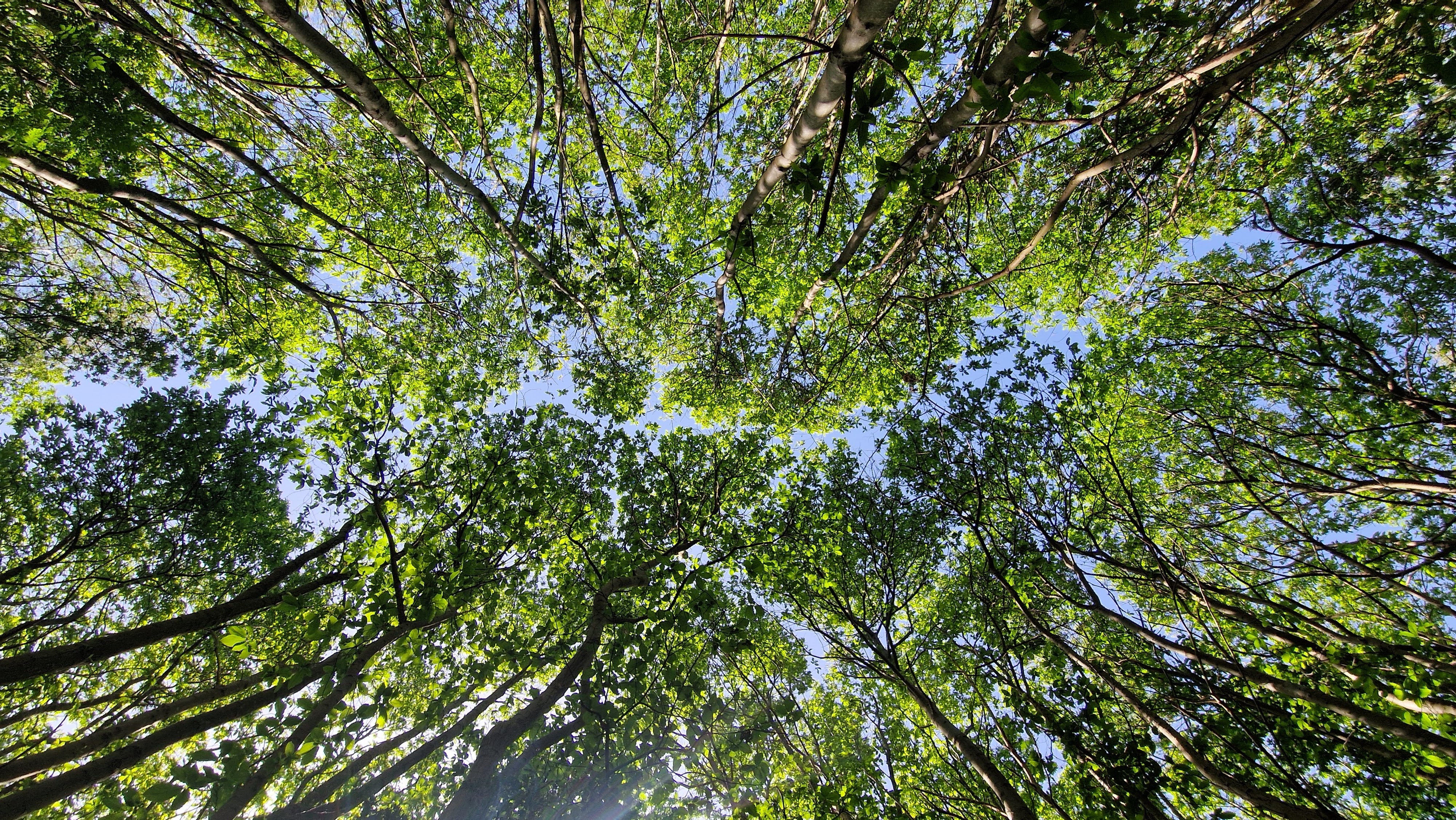
There are some nice woodlands close to where I live. I visit them several times a week – especially in the spring and summer – for walks and to engage in forest bathing. I have been to this patch of woodland several times since the middle of April this year and have made the effort to notice the transition from spring to summer.
There was a profusion of bluebells on the woodland floor in the spring…
… then the gradual growth of foliage in the shrub layer followed by the development of a dense canopy in early summer.
Over the last two or three weeks, the sounds of birdsong have been more intense and noticeable. Rabbits and squirrels are more common, molehills are appearing and woodland species of butterflies are making an appearance. Yesterday, I saw a woodpecker.
I noticed some other things too.
At the time of writing (24 June, 2026), here in Southern England, we are experiencing an unseasonal heatwave with record-breaking temperatures being predicted. In the early hours of yesterday morning, there were intense thunderstorms and heavy downpours. The woodland floor was damp and the air was still and humid.
The first thing I noticed was the smell. They were so much more intense than normal. Sweet floral notes and earthy, mossy, fungal vegetal odours combined in ways that were surprising.
The way my skin felt was very different. The warm, still, humid air felt as if it was enveloping me. Just about every one of my senses was awakened and seemed more sensitive.
The contrast between yesterday and three days before was remarkable.
That contrast in experience may be because I have been making an effort to notice my environment more – something that is an essential component of the practice of forest bathing. It is almost certainly amplified by being able to experience a totally immersive sensory experience by being naked. I am sure that the changes in the way the air felt wouldn’t have been as obvious were my skin to be covered.
Aletheia is all about experiencing the truth of the environment and our unconcealed place in it. This purposeful noticing of the environment, rather than the passive acceptance of our place in it really makes a difference to my appreciation of nature, our vulnerability in its majesty, but also the way that nature changes over time.
I am not a religious person, and I have written before about my humanist outlook. However, immersion in natural places explains why so many religions are rooted in respect and worship of nature – human survival is deeply entwined with the survival of our natural environment.
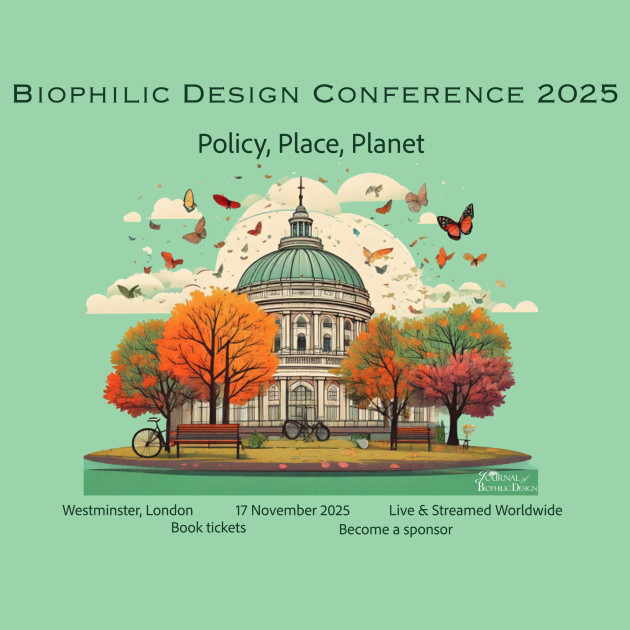
I recently attended the Biophilic Design Conference in London, where Ulysse Dormoy discussed the health impacts of modern office lighting, emphasizing the need for full-spectrum lighting in built environments.
This post also explores the benefits of total immersion in better light and explains possible additional wellbeing benefits of naked forest bathing and naturism. This post includes illustrations depicting nudity and the human form.
Is modern office lighting as good as it could be?
On 17th November 2025, I was lucky enough to attend the second International Biophilic Design Conference in London.
There were several really interesting presentations about the benefits of reconnecting with nature, and one of the really interesting talks was about office lighting. It was given by Ulysse Dormoy, an expert in the subject.
Ulysse Dormoy’s presentation spoke mainly about the role of far red (FR) and near infrared (NIR) wavelengths and their impact on human health. These wavelengths are just beyond the visible spectrum, and are essential for human health. This energy penetrates soft tissue and drives the reactions that take take place in mitochondria – organelles in every living cell (plants as well as animals) that power life.
We need light for more than just vision
The modern built environment – especially office buildings – relies on highly efficient LED lighting to illuminate our spaces. Modern, energy-efficient LEDs used in offices are often optimized to peak in the blue spectrum and a narrow band of red (which is difficult to achieve in LEDs without losing efficiency). This is fine for vision.
However, LED lights used in workplaces are frequently almost devoid of the NIR and Far-red components prevalent in both sunlight and older light sources. Couple this with the treatments applied to glazing to minimize excess heat getting into buildings from sunlight, then we have a problem that might affect human health.
For humans, the absence of NIR means the loss of a key input for mitochondrial health, called photobiomodulation (PBM). This leads to impaired cellular energy management that may be linked to accelerated ageing and a reduced healthy lifespan.
The presentation highlighted the disconnect between the necessary natural light spectrum and the light provided by the modern built environment. Considering humans spend approximately 90% of their time indoors, the quality of artificial light becomes a major concern for cellular health and ageing.
Modern lighting schemes may not be as optimized for wellbeing and health as you might expect. There are two issues:
Lack of infrared light (NIR/Far-red)
Older incandescent sources naturally emitted a high proportion of Near-Infrared (NIR) and Infrared (IR) energy. Modern, highly efficient light sources, particularly LEDs, are spectrally deficient in these wavelengths. They are not needed for vision, so why expend energy producing them?
However, the absence of this infrared light is now thought to be a significant health hazard, as these wavelengths are vital for photobiomodulation (PBM) and maintaining mitochondrial function.
Loss of appropriate diurnal variation
The natural environment provides a continuous, dynamic shift in the ratio of blue to red light across a 24-hour cycle. As the sun tracks across the sky, the spectral quality of daylight changes. More red light at the ends of the day, more blue when the sun is high in the sky. The disruption of this diurnal variation in the built environment affects the body’s circadian rhythm and the corresponding cellular processes it governs.
The energy-efficient modern LEDs used in offices are often optimized to peak in the blue spectrum and a narrow band of red, while being nearly devoid of the NIR and Far-red components prevalent in both sunlight and older light sources. It is midday all day.
What does this mean?
For humans, the absence of NIR means the loss of a key input for mitochondrial PBM, leading to impaired cellular energy management that seems to be linked to accelerated ageing and reduced healthy lifespan. The core message is that human biology relies on a full-spectrum signal that is largely absent in the current built environment lighting design.
Near-Infrared (NIR) light, a key component of the Photobiomodulation (PBM) effect, must be absorbed through all accessible tissues of the body, not just the eyes, to exert its systemic effects on mitochondrial health.
The mechanism of PBM, which involves the absorption of photons by the mitochondrial enzyme Cytochrome c Oxidase (CCO), relies on light penetrating the skin and subcutaneous tissues to reach the underlying cells.
The long wavelengths of NIR (typically 700 nm to 1100 nm), are specifically beneficial because they penetrate deeper than visible light.
Unlike blue or green light, which is largely scattered or absorbed in the top few millimetres of the epidermis and dermis, NIR light can penetrate several millimetres, and in some cases, several centimetres (at high power densities) through biological tissue.
Studies indicate that for musculoskeletal treatments, more than 90% of the light energy is typically absorbed within the first 10 millimetres of soft tissue. However, depending on the wavelength (e.g., 810 nm) and power, measurable amounts of light can reach depths of several centimetres, allowing photons to interact with mitochondria in muscle, bone, and even the brain through the skull.
Recent research has suggested that long wavelengths of light, delivered to the body (e.g., the back), can also improve retinal function without direct eye exposure, implying a whole-body route for mitochondrial health benefits.
The benefits of uncovering
Unlike visible light, which is perceived by the eye, Near Infrared / Far red (NIR/FR) light affects the body through direct tissue penetration. Therefore, to maximize the systemic benefits of Near-Infrared (NIR) light on mitochondrial health, full-body exposure is beneficial, aligning perfectly with the principles of naked wellness.
By removing clothing, the maximum possible surface area of the skin is available to absorb the essential NIR and FR wavelengths from the environment (whether from natural sunlight or from spectrally complete indoor lighting systems). This maximizes the photon density reaching the underlying cells and, consequently, maximizes the activation of Cytochrome c Oxidase and the resulting boost in ATP production across the whole body.
This connection provides a compelling, evidence-based argument for integrating naturism into the design of truly restorative, biophilic, aletheic environments, turning the practice into an act of maximizing cellular health and biological efficiency.
An additional benefit of forest bathing
I’ve discussed forest bathing before, and the main impact – apart from the psychological connection with nature – seems to be related to phytoncides, the volatile chemicals emitted by plants.
However, there is another factor that may help with the wellbeing effects of the practice.
Direct sunlight is natural, unfiltered light, which is rich in red light. This is not only good for the human body, but provides the energy needed for plants to photosynthesize.
Chlorophyll – the green pigment found in plants – strongly absorbs the red wavelengths (used for photosynthesis) but transmits or reflects the Far-Red wavelengths (which are less useful for energy fixation, but good for mitochondrial health in animals, such as humans). This skews the light spectrum toward Far red in the shade of a forest canopy.
Furthermore, as far red and NIR light penetrates shade, the benefits of exposure to this light can be achieved in an environment where sunburn risks are reduced by the shade of the woodland canopy. Naked forest bathing is not only good for reconnecting with the majesty of nature, but also a very effective way to maximize the amount of beneficial far-red light absorbed by the body.
What about the built environment?
Biodynamic lighting, which incorporates more red and far-red wavelengths are available. Such systems can be programmed to mimic the diurnal cycle of light quality. They are more expensive than standard lights, but could be used in places such as wellness rooms, found in many office buildings. They could also be used in the home.
Spas and health clubs could create ‘light showers’ – spaces where the body to could be immersed in full-spectrum biodynamic lighting. Imagine a space that you could sit, stand or walk through that provides real benefits to bodily health rather than tanning booths that can be risky if used too much.
Whilst exposure to NIR won’t give you a tan, it might bring real health benefits.
Forest bathing, or Shinrin-yoku, enhances well-being by immersing oneself in nature, reducing stress and anxiety while boosting mood and cognitive function. Usually practiced clothed, nudity may deepen the connection to nature. Ultimately, the goal is to connect with the natural world, promoting joy, peace, and personal renewal.
Note: This post explores the psychological and wellbeing benefits of naturism within natural and biophilic environments. It contains illustrations depicting nudity and the human form.
Forest bathing, or Shinrin-yoku, is a Japanese practice that involves immersing oneself in a forest environment, aiming to improve overall wellbeing. This therapeutic activity has gained significant traction worldwide, with scientific studies increasingly validating its numerous benefits.
While the concept of connecting with nature is universally appealing, there is a growing movement to carry out this activity naked as a way to amplify the restorative powers of forest bathing.
Restoration and relaxation
The allure of forest bathing lies in its ability to reduce stress and anxiety. Studies have shown that spending time in nature lowers cortisol levels, the hormone associated with stress. The forest environment, rich in phytoncides – volatile organic compounds emitted by trees – has been linked to boosting the immune system and improving mood. Recent research has also shown how trees radiate beneficial near infrared radiation as well.
Furthermore, the soft, earthy hues, the gentle rustling of leaves, and the melodious bird songs create a serene atmosphere that promotes relaxation and mental clarity.
Moreover, forest bathing has also been shown to enhance cognitive function. Research suggests that spending time in nature can improve attention, memory, and creativity. The absence of digital distractions and the opportunity to engage with the natural world offer a much-needed respite from the constant stimulation of modern life. Studies have also indicated that forest bathing can lower blood pressure, reduce the risk of heart disease, and improve sleep quality.
While these benefits are undeniable, there is also a compelling argument for incorporating naturism into the forest bathing experience.
Complete immersion
Nudity, often associated with vulnerability and authenticity, can deepen the connection with nature. By shedding societal constructs and physical barriers, individuals can fully immerse themselves in the forest environment, allowing their senses to be heightened. The absence of clothing can reveal a sense of freedom and liberation, promoting a deeper state of relaxation.
Furthermore, naturism facilitates a more intimate connection with one’s body. By accepting and embracing one’s physical form in a natural setting, individuals can develop a healthier body image and self-esteem. The experience of being naked in nature – the ultimate act of aletheia, or truth-revealing – allows the body’s true unity with the environment to be revealed, breaking down the artificial boundaries between humans and the environment.
The idea of nude forest bathing may be confronting for some. Cultural norms and personal comfort levels vary greatly, so the decision to embrace naturism is entirely personal. Forest bathing is certainly beneficial with clothing, but my personal experience suggests that it can be much better without. The core principle is to find a way to connect with nature in a way that promotes well-being.
It is wise to choose a secluded and private forest location and it might be a good idea to join an organized group if you are a novice or a bit nervous about the idea.
Forest bathing can be a powerful tool for enhancing physical and mental health. By immersing oneself, totally, in the natural world, individuals can experience a range of benefits, from stress reduction to improved cognitive function. The absence of clothing maximizes the absorption of beneficial far red and near-infrared wavelengths (radiated by trees and sunlight) across the body’s largest organ (the skin).
While clothing is not a barrier for enjoying the forest environment and the benefits of forest bathing, naturism offers a unique opportunity to deepen the connection with nature and oneself. Ultimately, the most important aspect is to find a way to connect with the natural world in a way that brings joy, peace, and renewal.
And for those who are open to exploring naturism, forest bathing could be the perfect gateway. Short, gradual exposure to nudity in nature, maybe in private, will help build comfort and confidence.
Disclaimer: This article is intended to provide information and does not constitute medical advice. It is essential to consult with a healthcare professional before making significant changes to your lifestyle or engaging in any new activities.