
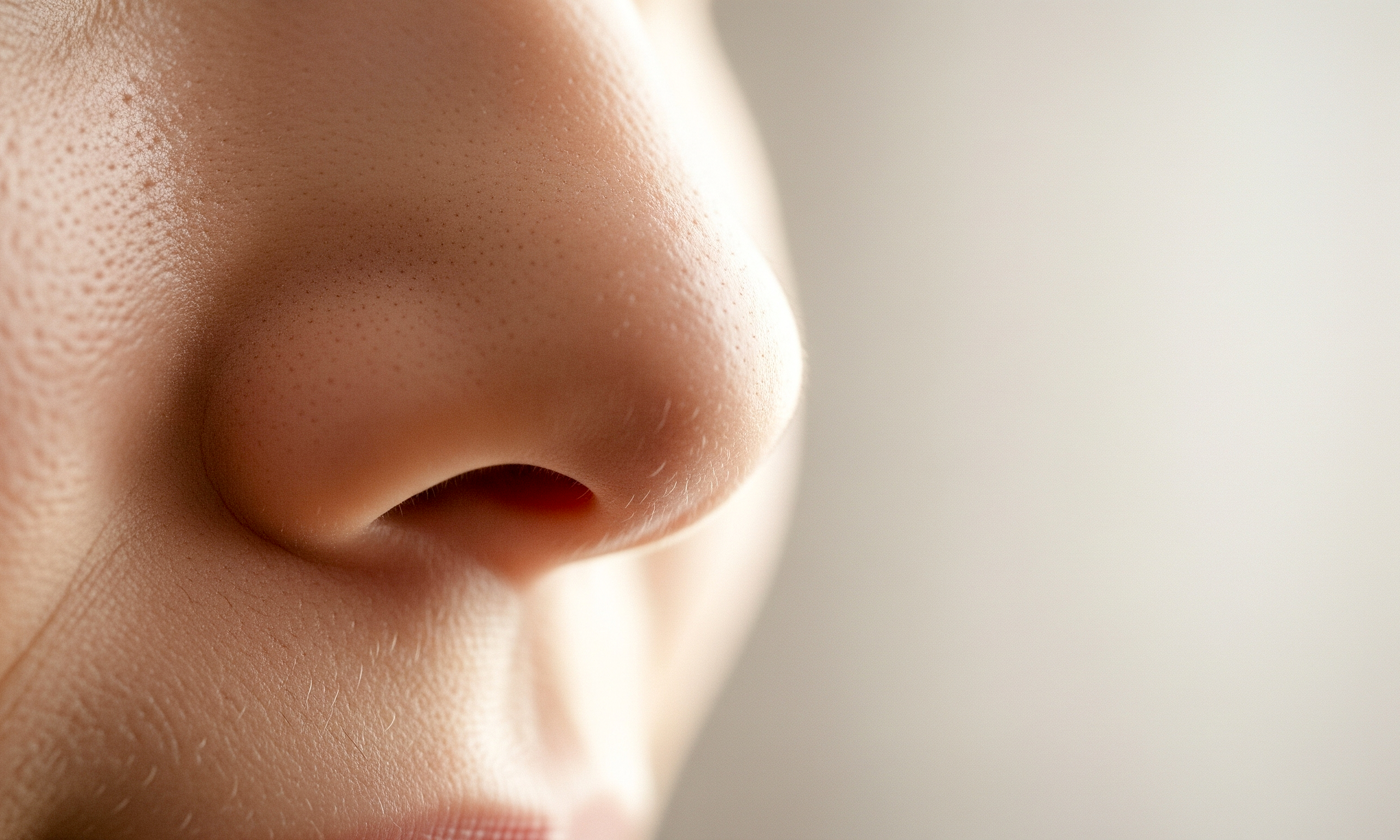
Designing biophilic environments prioritises visual and acoustic elements, often neglecting the significance of smell. Our sense of smell is crucial for triggering memories and influencing emotions, making ambient scenting an emerging practice in biophilic design. Properly selected scents can enhance well-being, while inappropriate scents may provoke negative reactions, highlighting the importance of thoughtful implementation.
When creating a biophilic environment, designers concentrate on visual elements first, and then the acoustic environment. Further down the list of priorities are those elements relating to touch.
I have mentioned how our skin is especially under-stimulated and how our relationship and understanding of our environment can be changed for the better when we allow our skin to interact more completely with our spaces.

There is another group of senses that are often ignored, but which may be heavily stimulated, but not always in a good way. These are our chemical reception senses, especially smell.
Of all the senses, odour perception (smell) is the most powerful trigger of memory.
Our sense of smell also permeates our language. We can enjoy the sweet smell of success, avoid the stench of failure and – if we are lucky – come through our troubles smelling of roses.
A hint of old fashioned floor polish can transport some of us back to primary school, the waft of a familiar perfume can reignite feelings for an old flame, the smell of freshly baked, homemade cakes can bring back memories of a childhood visit to a grandmother.
What is our sense of smell
Chemical perception is almost as old as life itself – even single-celled organisms react to changes in their chemical environment. Smell is the detection and perception of chemicals in the air – if we can detect them, then they are odours.
Odours are detected by organs near the base of the brain. The receptors are in the tissue in the nasal cavity, and are interpreted by the olfactory bulb at the front of the brain. The olfactory bulb is closely associated with the limbic system – the most primitive part of the brain’s systems, and one which triggers instinctive responses and deep memories – you may react to a scent before you even know it.
Humans are able to detect about 3,000 different odours, but are only able to differentiate between about 300 individual odours. A scent may be made up of a combination of different odours in varying proprtions.
Compared with some other mammals, notably dogs, the olfactory bulb is relatively small – the visual cortex is our primary sense interpreter. In dogs, the olfactory bulb is 30 – 40 times larger (relative to brain size) than in humans, whereas most birds have olfactory bulbs that are tiny in comparison to ours.

- Olfactory bulb
- Mitral cells
- Bone
- Nasal epithelium
- Glomerulus
- Olfactory receptor cells
Scent preference is very personal – people like different things. It can trigger emotional, often irrational, responses (good or bad).
Men and women perceive some scents differently, which may also be affected by hormone levels, and the presence of several genes associated with odour detection on the X chromosome.

Some people are unable to detect certain scents (odour-specific anosmia). Some adults (disproportionately men – including me, and my father) are unable to smell Freesia flowers, although I remember their scent from childhood. This is a genetic trait that affects about 10% of the population.
Age makes a difference to scent perception. Younger people have a more acute sense of smell than older people. Like most of our senses, the sense of smell dulls with age. From an evolutionary perspective, being able to perceive whether a potential mate is fertile (even if not a conscious perception) is very valuable. Odour concentration in sweat and breath can vary according to sex hormone levels.
Malodours represent something unhealthy and to be avoided – unsanitary conditions or the presence of rotting waste. Smells derived from solvents and other building materials prime your body to try and avoid the area.
How does this relate to biophilia and biophilic design?
Ambient scenting is a relatively new design practice in buildings. It is all about enriching spaces and adding an extra sensory dimension to indoor environments. This is different from odour remediation, which is about masking or neutralizing unpleasant odours.
The psychology of scenting is a relatively new discipline, although there is a growing body of research to demonstrate how scenting can affect mood and emotion. In some circumstances, it can be used to manipulate behaviour, such as spending – some shops and hotel chains use signature scents as part of their branding strategy, and the smell from in-store bakeries is often used in supermarkets to tempt customers.
Measuring the responses and reactions to different fragrances is helping designers to add an extra dimension to interior space and when used alongside other decorative items, such as plants, art, light and music, scenting can complete our sense of the space.

Naturalistic scents released into the environment that are much more similar to those found in healthy human environments, and some scents, notably lavender, have a measurable effect on human physiology, causing changes in stress and alertness. With other scents, the effect is harder to characterize, but as the responses to certain scents are often consistent, it is not unreasonable to assume that a change in physiology is occurring.
However, when used inappropriately, scent can also trigger hostile responses or even evoke memories of traumatic experiences – getting the scent choice and dose correct is vitally important.
Like music, fragrances can be formulated to appeal to particular age groups, genders and other demographics. However, the designer of the ‘scentscape’ needs to be able to understand the needs of the target audience. I have already mentioned that men and women perceive some smells differently, and age has an impact too.
Habits and behaviours also affect our ability to discriminate between odours. For example, smokers have a weaker sense of smell, as do heavy drinkers. Scent perception may also be different after a strongly-flavoured meal.
This means that if a designer is creating a scented space, it should be carried out with someone representative of the target demographics of the user of the environment. For example, a shop aimed at selling fashion to young women ought not to have the scenting designed by an old, male smoker!
The technology of scenting

Ambient scenting can be as simple as a scented candle or reed diffuser, or as complex as a programmable, electronic system tied in to the air handling system of a large building. In commercial spaces, complex systems are ideal – they can be programmed to manage the intensity of the scenting experience , and even change the fragrances during the day.
On a domestic scale, candles or reed diffusers can be effective, although there are some technological systems available too – essentially scaled-down version of the commercial systems described here.

Adding to an aletheic experience
Fragrance can be employed to enhance one’s sense of well-being, compress one’s perception of time spent, evoke fond memories and remind one of nature and other places where we feel at one with our environment.
A coherent and complete sensory environment means that the body can truly be at ease. Distractions are minimized and it is possible to really engage with the space you are in.
As an aletheic experience, this can help with activities such as meditation and relaxation help us imagine that we are in a more natural place.