Tag: vulnerability

  • Safe vulnerability

    Safe vulnerability

    In this article I explore the idea of aletheia, or truth revealing, through vulnerability in nature. It emphasizes the liberating yet challenging experience of being completely exposed to, and immersed in nature whilst also being safe. Suggestions on how to foster this connection at home are offered as well as ideas about wild swimming and accessing and creating secluded areas for contemplation.

    Note: This post explores the psychological and wellbeing benefits of naturism within biophilic environments. It contains illustrations depicting nudity and the human form.

    Be a part of nature, not just an observer of it

    The concept of aletheia is all about the process of unconcealment in order to realise a truth about ourselves and our place in the environment.

    By baring all and removing that which separates us from nature we can then truly become part of nature. It is both liberating and challenging to be so exposed. Liberating in the sense of total freedom from artifice and judgement but challenging as you recognise your vulnerability as an individual – just one of over eight billion people – in the vastness of nature.

    That heightened sense of vulnerability can be enlightening and thought-provoking, and maybe even a bit thrilling (much like getting on a roller coaster for the first time). Sometimes, however, the fear of exposure and judgement can override the positive sense of self knowledge. This is why a sense of safety and trust is vital.

    If you know that you are safe and that you won’t be interrupted, then baring all – literally and figuratively – in a natural, or naturalistic, environment can bring clarity to your thoughts and a sense of peace and calm.

    I touched on this experience in an earlier post. Now, I will discuss some of the ways by which you can practically experience safe vulnerability.

    Raw immersion in nature

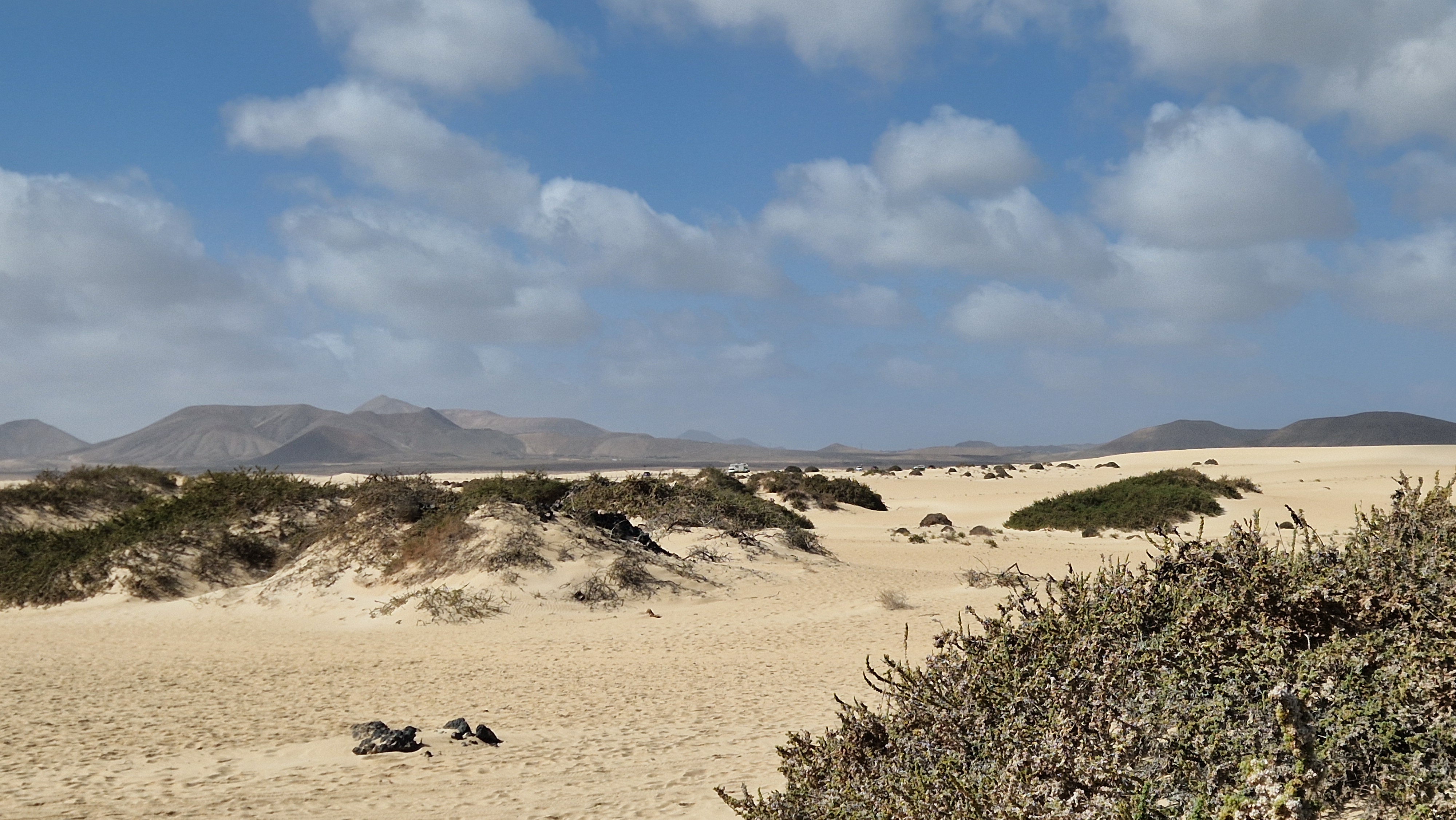
    A view of the Dunes National Park in Fuerteventura, Canary Islands, Spain showing a vast landscape of sand, rocks and mountains in the distance with no people in sight

    There are times and places when being alone in a natural place can be awe-inspiring. Sometimes, just the vastness of a landscape means that it is possible to be away from any distraction from technology or any interruption from another person. It is possible to overlook a landscape and be aware of any ‘threat’ long before it becomes obvious. That sense of being alone and uncovered in the grandeur of nature allows one to appreciate the truth about our place in the environment.

    As well as being immersed in a landscape, immersion in a more literal sense is also worth investigating. Wild swimming has become an increasingly popular activity, and naked wild swimming allows a truly deep connection with the environment and a total sensory experience (although you should always be with someone else, for safety reasons).

    AI-generated image of a middle-aged man wild swimming in a lake and gaining the benefits of immersion in a natural environment

    Sometimes, nature can be more intimate and sheltering. A woodland clearing or a secluded spot on a river bank can provide refuge and shelter and be ideal places to have an aletheic experience.

    An image of some coniferous woodland (tall trees) with a naked male in the foreground contemplating his place in nature. This illustrates an awe-inspiring natural space that is also secluded.

    Often, natural places are busy. After all, getting into nature is good for us and a popular activity. This can make being alone with your thoughts in nature more difficult – especially when you wish to experience it in a raw, unconcealed state.

    If you are lucky enough to have access to private land, with permission, then your opportunities are greater. The chances of being disturbed are lessened and you can immerse yourself in the environment on your own terms.

    Many naturist clubs and associations have areas of wilderness or woodland on their land. My local venue has over 20 hectares of land, and a large part of that is woodland. That is a place where I can find a spot to stop, think and experience benefits such as forest bathing.

    Sometimes, just knowing when a place is likely to be quiet will give you the opportunity that you need. Experiencing the majesty of nature in moonlight can be a profound experience, as can getting to a beach early in the morning to experience the crash of waves onto the shore when no-one else is there.

    ai-generated image of a young, apparently nude, woman experiencing the majesty of nature by moonlight

    Creating a safe space closer to home

    Getting out into nature to experience aletheia is not always easy, especially if you live in an urban area or if transport is not readily available. It is possible to create spaces in and around the home where the feelings associated with safe vulnerability can be achieved.

    AI-generated image of a small space set aside in a garden to provide privacy whilst still being able to experience nature.  The space includes planting, paving stones, a trellis and a pergola

    If you have a garden – even a small one overlooked by neighbours – a secluded nook can be created easily and at a low cost. The careful placement of plants and structures such as a trellis and pergola can provide the safety of privacy whilst still being permeable and open to the elements. Balconies and courtyards can also be planted and screened to increase privacy whilst also bringing nature closer to the home.

    AI-generated image of a balcony of a flat (apartment) with a variety of plants and herbs, as well as screening plants for privacy

    Indoor spaces also provide opportunities for connection to nature in a way that provides safe vulnerability. It is possible to create a simple aletheic space for a very low cost that provides both an immersion in a naturalistic environment with the security of being in one’s own home. It doesn’t even have to be a dedicated room. You can set up a corner in a larger room

    AI-generated image.  A corner of a room with windows screened with sheer voile curtains. Houseplants, armchair and a rug on a wooden carpet. Nude figure standing, looking pensive, through a window on to a view of plants and trees

    The use of screening plants near doors or windows, sheer voile curtains over large windows and large houseplants create the aesthetics and textures. Adding natural scents and a nature-based soundscape from a smart speaker can help to create a holistic sensory experience and really bring a sense of the outdoors into the home.

    The keys to safe vulnerability

    Aletheia is the experience of revealing truth about ourselves and our environment through stripping away artifice and the unnecessary. It is about authenticity. Sometimes, however, we have to simulate an environment in order to experience the fleeting sense of vulnerability – the butterflies in the stomach – that can lead to a deeper understanding of ourselves.

    In the environments where we live and work, this might require some forethought. Privacy might be an issue, or the risk of distractions from people or – more likely – our phones.

    These can all be overcome, often with little cost attached. The keys are understanding how to use places and time to their best effect.

    Contact me for advice about your own space and how to create an aletheic environment?

    ← Back

    Thank you for your response. ✨

  • Risk, peril and awe

    Risk, peril and awe

    In this post, I explore some of the patterns of biophilic design: categorized into nature interactions, spatial qualities, and the psychological impact of environments. The feelings of risk, peril, and awe highlight how these elements could enhance experience in authentic spaces.

    Note: This post explores the psychological and wellbeing benefits of naturism within biophilic environments. It contains illustrations depicting nudity and the human form.

    In my last post, I mentioned the work by Terrapin Bright Green about the patterns of biophilia and how they can be incorporated into the built environment. The patterns are grouped into three categories

    Nature in the space

    This is, essentially, the stuff you put in, on and around a building to evoke a sense of being in nature

    • Visual connection with nature (e.g. plants and greenery)
    • Non-visual connection with nature (e.g. scents and soundscapes)
    • Non-rhythmic connections with nature
    • Thermal and airflow variability
    • Presence of water
    • Dynamic and diffuse light
    • Connection with natural systems

    Natural analogues

    This relates to materials and nature-inspired design

    • Biomorphic forms and patterns
    • Material connections with nature
    • Complexity and order

    Nature of the space

    This is the area I find most fascinating, as it relates not just to what is used, but how the space is used and how we feel in the space.

    • Prospect: views over a distance
    • Refuge: a place for withdrawal where there is safety, privacy and room to contemplate
    • Mystery: encouragement to travel deeper into the environment
    • Risk / peril: an unidentifiable threat coupled with the knowledge of a reliable safeguard
    • Awe: stimuli that defy an existing frame of reference and lead to a change in perception

    I think that the last two patterns can be the ones that can be most revealing of themselves and of ourselves. This is the bridge between biophilia and aletheia.

    The patterns of risk / peril and awe are deeply rooted in our innate psychological and biological responses. When applied to an aletheic environment – a space where truth, non-concealment and unconcealedness are central – the experience becomes about confronting reality directly and authentically.

    Experiencing risk and peril in an aletheic environment

    Risk and peril is about feeling an identifiable threat coupled with a sense of security. In a true, unconcealed space, this isn’t about physical danger but about psychological and social vulnerability.

    The peril is the risk of being seen, judged, and fully exposed, not physically but in a raw, authentic state. The safeguard is the trust and acceptance of the environment and the people within it. This creates a sense of profound psychological safety.

    As a sensory experience, the peril could be the feeling of being fully exposed to the elements, such as the cold touch of stone, an unexpected breeze, being caught in a shower of rain or the warmth of the sun on the skin. This is a direct, unmediated sensory feedback which leads to an authentic, unconcealed experience of the environment.

    When we consider the design of a space, we might think about spaces with a high, open ceiling (prospect) that also has small, intimate nooks (refuge). The “risk” is the exposure of the open area, while the “safety” is the option to retreat. The design itself mirrors the push and pull of vulnerability and security.

    Experiencing awe in an aletheic environment

    Awe, as a pattern, is about confronting something vast and complex that challenges our existing understanding. In an aletheic context, awe comes from a sense of truth and connection.

    Awe can be evoked by witnessing the raw, unconcealed power of nature.

    In nature, these environments could be vast forests, open plains, high waterfalls of sheer cliff faces. Places where we really can recognise our vulnerability against such scale and natural power, but also knowing that, as a species, we have been able to navigate, and even thrive, in such environments.

    A photograph of a large banyan in India showing how one organism can become vast and make a person feel small and vulnerable in comparison.  Image by the author

    Sometimes, we can also create such spaces. Places like the Great Pyramids, Stonehenge, vast cathedrals and temples all evoke a sense of awe. More modern spaces such as the magnificent palm house at Kew Gardens, the Eden Project in Cornwall or even places such as Bangalore Airport can make one gasp.

    Imagine a large indoor waterfall, a living wall that extends through multiple floors, or a glass ceiling that reveals the night sky. These elements present a complex, vast system that you can directly experience, connecting you to something bigger than yourself.

    A photograph of the terminal building at Bangalore Airport, India, showing how nature-inspired architecture on a vast scale can create a sense of awe

    Unconcealed Design

    Awe can also come from the honesty of the materials and structure. Exposed building materials like raw concrete, untreated wood, or a direct view of a building’s mechanical systems can be awe-inspiring in their authenticity and lack of artifice.

    A photograph of the Lloyds of London building, Lime Street, London
    Lloyds of London building.
    Photo by Kei Scampa on Pexels.com

    The complexity and beauty of biomorphic forms can also inspire awe. A large, spiral staircase mimicking a seashell or a structure with branching columns like a tree can create a sense of wonder and connection to the vast patterns of life.

    A photograph of the interior of Changi airport, Singapore
    Interior of Changi Airport, Singapore.
    Photo by Lynde on Pexels.com

    Raw exposure: nudity amplifies the experience

    Nudity in these spaces doesn’t just add to the experience; it can fundamentally change it, making the sensations of risk, peril, and awe more intense and immediate. It is easier to achieve in a natural environment, but could be possible in the built environment – perhaps through out-of-hours naturist tours of places like a grand botanic garden or architectural masterpiece.

    AI-generated image of a group of naturists visiting a tropical plant house in a botanic garden

    Being unclothed removes a primary layer of social protection and concealment. It makes the risk of being seen more palpable and immediate, which in turn makes the safety of the trusting environment even more profound. The body’s immediate vulnerability to temperature changes and textures also heightens the sensory peril and the confidence in a safeguard.

    an ai-generated image of a naked person navigating a maze with high hedges

    Nudity creates a direct and unmediated experience. Being naked removes the physical and psychological barrier between the person and the environment. You are not just observing the space, you are directly interacting with it through your whole body. This unmediated connection enhances the feeling of aletheia, as there is no concealment between you and the truth of the space.

    ai-generated image showing a naturist in a natural green space

    The experience of awe becomes embodied. Instead of just a mental concept, you feel the smallness of your body in a vast space or the intricate complexity of a natural pattern against your skin. This can lead to a deeper, more visceral sense of wonder and connection to the world around you.

    an ai-generated image of a naked person standing on a cliff edge overlooking a deep canyon

    The integration of nudity in an aletheic, biophilic space is not just about personal preference but about a deeper philosophical alignment with the patterns themselves, a move towards total non-concealment and an authentic experience of the world.