
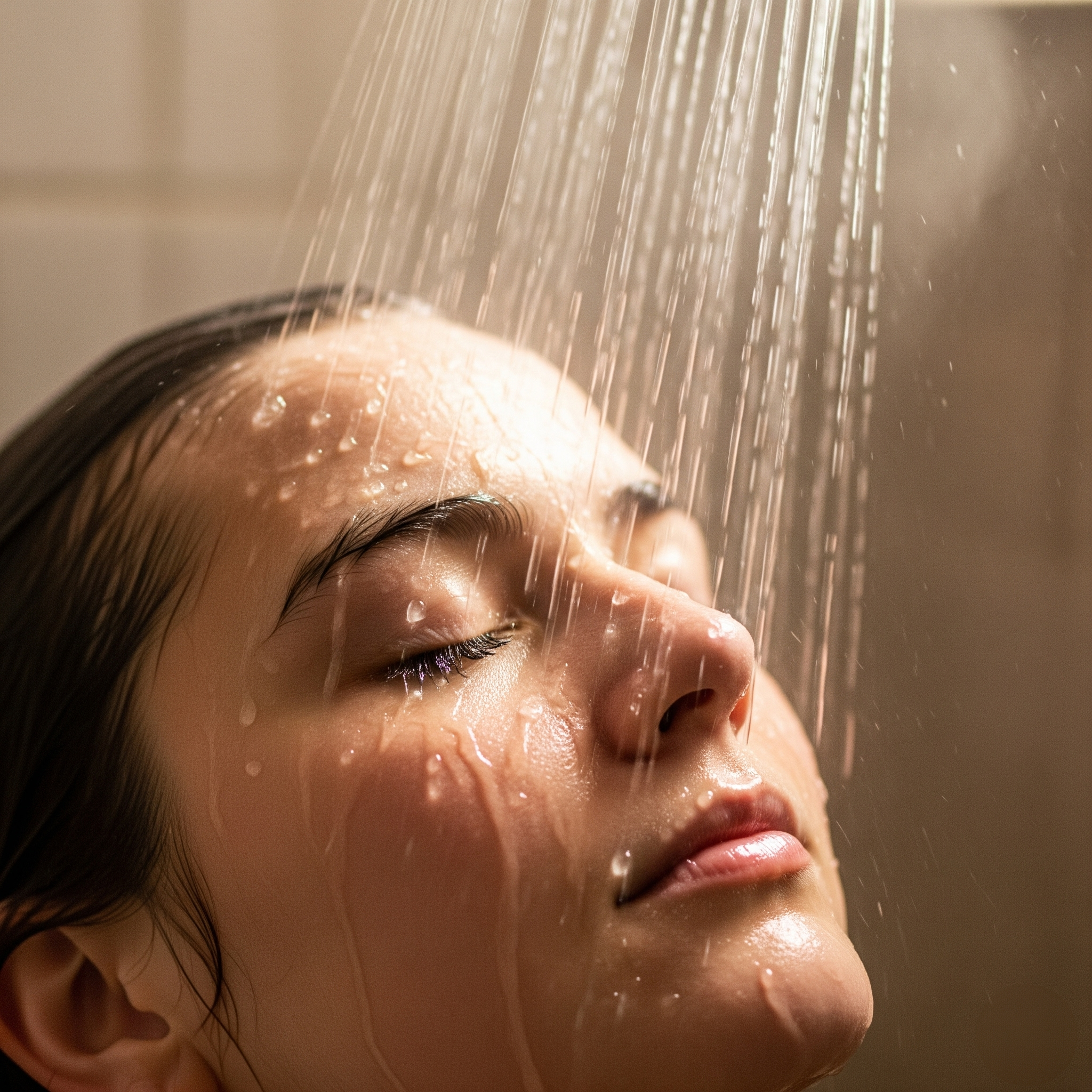
The article explores the biophilic benefits of incorporating water into the home environment, particularly through warm showers. It highlights how such experiences engage the senses, promote wellbeing, and create a meditative state. Suggestions for enhancing bathroom aesthetics include using cohesive materials, soft lighting, plants, and mirrors to foster a calming, nature-inspired atmosphere.
Note: This post explores the psychological and wellbeing benefits of naturism within biophilic environments. It contains illustrations depicting nudity and the human form.
The biophilic use of water in the home
When you take a bath or a shower, do you stay in the water just long enough to get clean, or do you enjoy a long, warm soak? If the latter, do you do it wearing clothes? Of course not. The pleasure comes from the full immersion of the body and receiving all of the messages sent by your skin to your brain that confirms all is well.
I have previously written about the benefits of incorporating non-rhythmic stimuli into the built environment as a biophilic design intervention. In both the home and the workplace, we can use such stimuli to add an extra dimension to our sensory experiences, which ought to improve our wellbeing and comfort.
In the home, one of the simplest, and most potent, things you can do to create a biophilic experience is to take a nice, warm shower.
A warm shower can be more than a utilitarian act of hygiene – it is a deeply pleasurable, biophilic experience. It engages so many of our senses: sound, touch, smell (if your shower gel is nice) and warmth in ways that can be both soothing and invigorating. This offers a good blend of physical and psychological benefits. One reason for this pleasure lies in the non-rhythmic sensory experience it provides, which is an important element of biophilia and our innate need to connect with nature.

Unlike the predictable, repetitive stimuli we often encounter in daily life, such as the hum of a computer or the ticking of a clock, the sensation of water cascading over the skin is irregular and varied. This non-rhythmic stimulation captures our attention without overwhelming us. The gentle, unpredictable patterns of water droplets hitting the bare skin can almost induce a meditative state, allowing the mind to unwind and release stress and provide a mental escape.
The skin, as our largest sense organ, plays a central role in this experience. As warm water flows over the whole, naked body, it stimulates countless nerve endings embedded in the skin, sending signals to the brain that trigger the release of feel-good neurotransmitters like endorphins and serotonin. The warmth of the water also promotes vasodilation, improving blood circulation and creating a comforting, enveloping sensation. This tactile stimulation is deeply grounding and fosters a sense of physical and emotional well-being. Furthermore, the contrast between the warmth of the water and the cooler air outside the shower can heighten sensory awareness, making the experience even more vivid and enjoyable. These elements could be thought of as a multisensory ritual that not only cleanses the body but also rejuvenates the mind. A warm shower is a profoundly pleasurable, restorative and essentially biophilic act – cleansing both mind and body.
Changing a utilitarian space into a biophilic, aletheic experience
We have “domesticated” water into chrome taps and plastic trays, but an aletheic wet room can restore water to its elemental state. It is no-longer just a shower; it’s an encounter with a spring.
Unfortunately, in most homes (certainly in the UK), our bathrooms are rather small and utilitarian. However, that does not mean that we can’t make them a little more biophilic and a lot more calming. They are spaces where we interact with our surroundings completely. We are naked. Our entire bodies are exposed to, and enveloped in, the space. We should make the effort to make ourselves as comfortable as possible.
Here are a few ideas.

Colours and textures
Materials
To make a small space feel larger, use continuity to try and blur the boundary between the floor and walls. This can be achieved by not using different different materials. For example, by using dark-coloured, large-format slate or stone-effect porcelain tiles on both the floor and walls, you create a receding effect, making walls feel further away.
Integrate a variety of textures on the floor. Non-slip surfaces are essential, but a pathway made up of smaller tiles – perhaps resembling stones or gravel can add some extra tactile interest for the bare feet, as well as visual interest.
Lighting
Harsh lighting is unflattering and can give the impression of being under some sort of interrogation. Apart from having some functional bright light near a mirror, then subtle, warm lighting would give the impression of being in a shady woodland space rather than an operating theatre.
Greenery
Wet rooms are ideal spaces for greenery, especially those species with their natural origins in the tropical rainforest. High humidity and relatively low lighting conditions will be ideal for a range of plants, including some ferns and small palms.

Tropical climbing / trailing species can be placed on high shelves, or trained to climb up a frame or moss pole to add some vertical interest and increase the impression of being in a forest.
Small orchids (such as a Phalaenopsis spp.) may also do well in these conditions and provide pinpoints of exotic colour.

As well as live plants, features such as preserved moss panels are ideal. Mounted on a wall, they are maintenance free, use no floor space and can cope with the high humidity found in bathrooms.

Mirrors
Large mirrors are not only functional, but can also be used to make a space appear larger. Placing a mirror opposite a greenery-filled corner or wall cabinet effectively double the botanical density of the room without taking up floor space.
Tinted or “antiqued” mirrors offer the spatial expansion of a mirror but with a softer, more moody reflection that can feel more like a deep pool of water than a sharp, self-critical surface.
What about an outdoor shower?
If you have the space, a suitably private corner in your garden and – ideally- warm weather, then an outdoor shower is a perfect way of enjoying the benefits of both the non-rhythmic sensations of water on the skin as well as being out in the fresh air, listening to birdsong and seeing and feeling the beauty of plants.
An outdoor shower can be as simple as a hosepipe fitted with a suitable nozzle, or as complex as a fully plumbed-in fixture. Obviously, you must ensure that building regulations and water regulations are followed if required.


Leave a Reply