
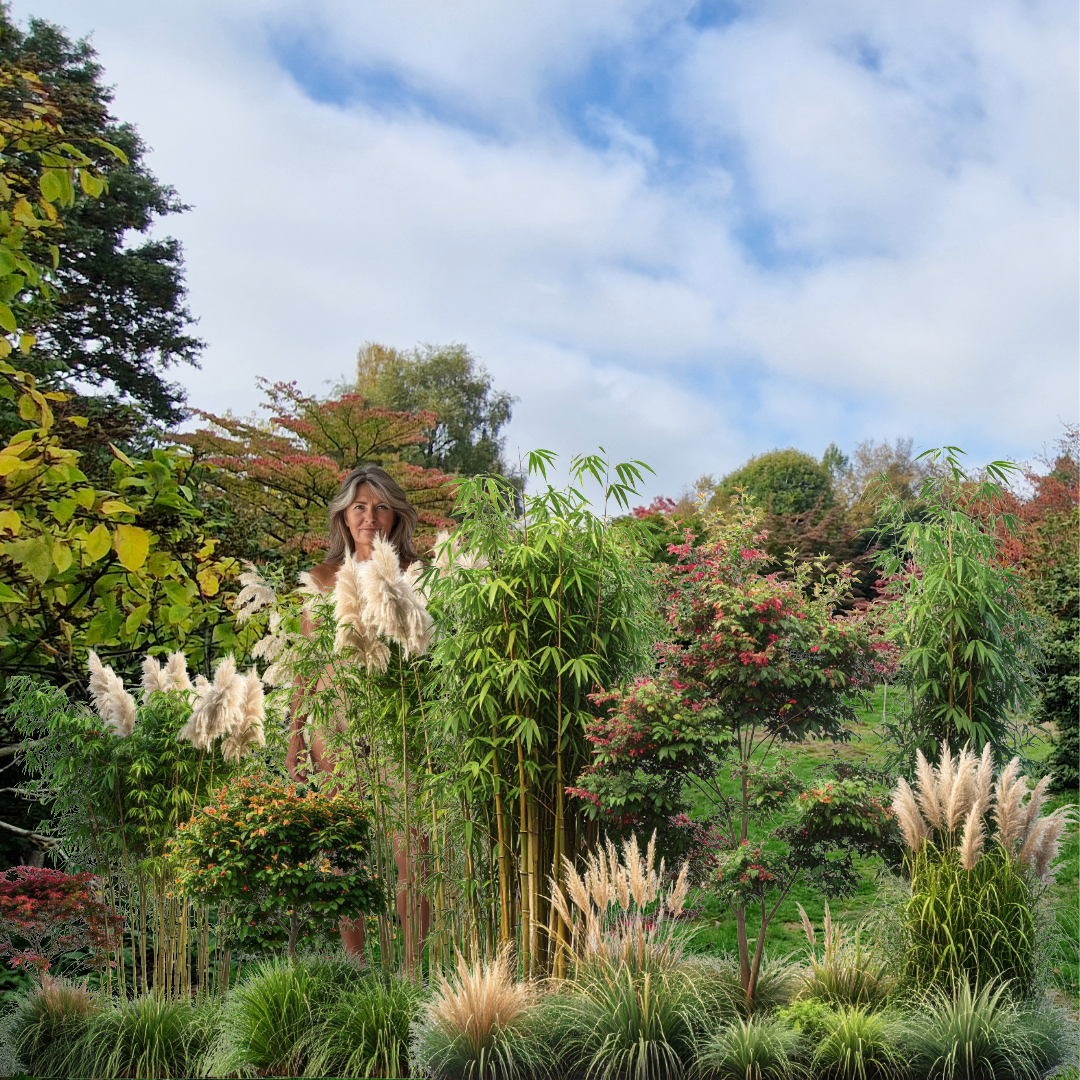
In this post, I discuss how to gain the psychological benefits of nudity and naturism in natural environments whilst maintaining privacy. I highlight aletheic experiences that promote authenticity and vulnerability and discuss the practicalities of finding private spaces for nudity, including gardens and designated beaches. There are design tips on enhancing privacy with plants and structures. Consideration of neighbours and surroundings is also emphasised.
Note: This post explores the psychological and wellbeing benefits of nudity and naturism within biophilic environments. It contains illustrations depicting nudity and the human form.
Authenticity and truth
Aletheic experiences are all about authenticity, unconcealedness and experiencing the truth about oneself and one’s place in nature. This involves confronting a sense of vulnerability safely and allowing the whole person – mind and body – to be immersed in the environment.
Finding a place to be completely at one with the environment can sometimes be tricky. Dedicated naturist venues, such as clubs, are few and far between and often open seasonally. They are often social spaces, although some larger sites have places where solitude is possible as well. However, if you need to travel or book a visit, then spontaneity is lost and planning is needed.

Designated naturist beaches are also a possibility, and some, such as Knoll Beach at Studland Bay in Dorset, England (shown here), are vast and offer plenty of space for private reflection and contemplation. However, many others can be crowded and quite exposing.
Secluded natural places are also worth considering. In the UK and in many other countries, the simple act of being naked in a natural space is perfectly legal. Respect for others, and the feeling that you may be asked to cover up may make relaxation more difficult.
This may mean that the only readily-accessible outdoor space is your own garden, or perhaps a balcony.
In the UK at least, being naked on your own property raises no issues about legality, or even acceptability. That doesn’t mean, though, that it is easy.
Being visible to neighbours can be challenging – they might not like the idea of unexpected nudity, and you might not like the idea of being seen, or judged, by others.
Aletheic experiences are deeply personal.
Site lines
Working out who can see you and from where can be a challenge, but it is an exercise worth doing. I mentioned this in a previous post, but it is worth revisiting.
Start by standing in your garden, on your patio or balcony in the spot that you will probably use the most and have a good look around. Make sure that you look up as well as across your space.
Consider taking some photographs – you can review them later and you might spot something that you hadn’t previously considered. The panorama feature on phone cameras can be useful here as well.
Here are a few points to remember:
- If you can’t see them, they can’t see you. Conversely, if you can see a window, then anyone on the other side of that window can see you.
- How far away are your potential onlookers? Can they really see you without the need for binoculars?
Planting
Tall plants are excellent features to incorporate. Whilst there may be limits to the height of fences that you are allowed to erect, there are far fewer restrictions on plants. Hedges, feature trees, shrubs and tall grasses such as bamboo (take care with bamboo – some species can be invasive) are good choices. They can even be planted in pots and moved around.

Try to use a variety of species, as that will be more naturalistic and biophilic – as well as more interesting.
Consider the existing plants in your neighbourhood – are there any planted in the area that are already site-line blockers if you reposition yourself?

Plants are much better than solid structures to provide shelter – they are permeable to light and air. They slow down wind speed and reduce turbulence and the sound of the breeze through foliage provides a non-rhythmic soundscape that can help mask intrusive noises.
Screens, parasols and shades
You don’t need solidity and density – and this applies to plants as well as to manufactured products. Materials and structures that break up outlines rather than blocking them entirely are ideal, especially if they contrast in colour or brightness.
Slats, lattices and mesh allow light and air to pass through them, but can be very effective at blocking views into your space.

The diagram above shows how site lines can still be permeable to the air and light, but still obscure the view, and the image below shows how lattice can be very effective at screening, despite being about 75% transparent. The lattice would be even more obscuring with climbing plants growing up it.

Distraction rather can concealment
During the First World War, various navies experimented with dazzle camouflage. Instead of trying to hide ships from attackers by painting them in shades of grey, navies painted their ships with bright, geometric patterns that broke up their outlines and made it difficult for an enemy to work out which part of a ship was which, and where it was going.

The aim wasn’t concealment, but confusion. The picture here shows a good example of the practice – it takes a few seconds to actually work out which way the ship is pointing and where the front actually is.
These days, many car manufacturers use similar patterns when testing new models so that the outline and features of their cars are hard to pick out – especially if photographed when they are moving.
High contrast, bold shapes, reflective surfaces and the positioning of focal points away from where you will be naturally draws the gaze of an observer away from you and towards the distraction.
Time shifting
If you can use your space at times when potential onlookers aren’t around, then that can be an opportunity. Having said that, with so many people working from home these days, it is much more difficult to predict when those times might be. Even if you think you know the habits of your neighbours, you do risk being caught out on occasion.
If you know your neighbours, you can always talk to them – there may be nothing to consider at all.
Want some advice? Get in touch
If you would like some advice on designing an aletheic, biophilic space – indoors or outside – please get in touch. We can discuss basic principles or you could book a formal consultation, either in person, or on-line.


Leave a Reply