aletheic environments

biophilic environments that awaken your senses

Tag: plants

  • Camouflage and distraction: a practical guide to maintaining privacy without blocking out the world

    Camouflage and distraction: a practical guide to maintaining privacy without blocking out the world

    In this post, I discuss how to gain the psychological benefits of nudity and naturism in natural environments whilst maintaining privacy. I highlight aletheic experiences that promote authenticity and vulnerability and discuss the practicalities of finding private spaces for nudity, including gardens and designated beaches. There are design tips on enhancing privacy with plants and structures. Consideration of neighbours and surroundings is also emphasised.

    Note: This post explores the psychological and wellbeing benefits of nudity and naturism within biophilic environments. It contains illustrations depicting nudity and the human form.

    Authenticity and truth

    Aletheic experiences are all about authenticity, unconcealedness and experiencing the truth about oneself and one’s place in nature. This involves confronting a sense of vulnerability safely and allowing the whole person – mind and body – to be immersed in the environment.

    Finding a place to be completely at one with the environment can sometimes be tricky. Dedicated naturist venues, such as clubs, are few and far between and often open seasonally. They are often social spaces, although some larger sites have places where solitude is possible as well. However, if you need to travel or book a visit, then spontaneity is lost and planning is needed.

    Photograph of Knoll beach, Studland Bay, Dorset, UK taken in early summer, showing a sandy beach and sea
    Knoll beach, Studland Bay, Dorset

    Designated naturist beaches are also a possibility, and some, such as Knoll Beach at Studland Bay in Dorset, England (shown here), are vast and offer plenty of space for private reflection and contemplation. However, many others can be crowded and quite exposing.

    Secluded natural places are also worth considering. In the UK and in many other countries, the simple act of being naked in a natural space is perfectly legal. Respect for others, and the feeling that you may be asked to cover up may make relaxation more difficult.

    This may mean that the only readily-accessible outdoor space is your own garden, or perhaps a balcony.

    In the UK at least, being naked on your own property raises no issues about legality, or even acceptability. That doesn’t mean, though, that it is easy.

    Being visible to neighbours can be challenging – they might not like the idea of unexpected nudity, and you might not like the idea of being seen, or judged, by others.

    Aletheic experiences are deeply personal.

    Site lines

    Working out who can see you and from where can be a challenge, but it is an exercise worth doing. I mentioned this in a previous post, but it is worth revisiting.

    Start by standing in your garden, on your patio or balcony in the spot that you will probably use the most and have a good look around. Make sure that you look up as well as across your space.

    Consider taking some photographs – you can review them later and you might spot something that you hadn’t previously considered. The panorama feature on phone cameras can be useful here as well.

    Here are a few points to remember:

    • If you can’t see them, they can’t see you. Conversely, if you can see a window, then anyone on the other side of that window can see you.
    • How far away are your potential onlookers? Can they really see you without the need for binoculars?

    Planting

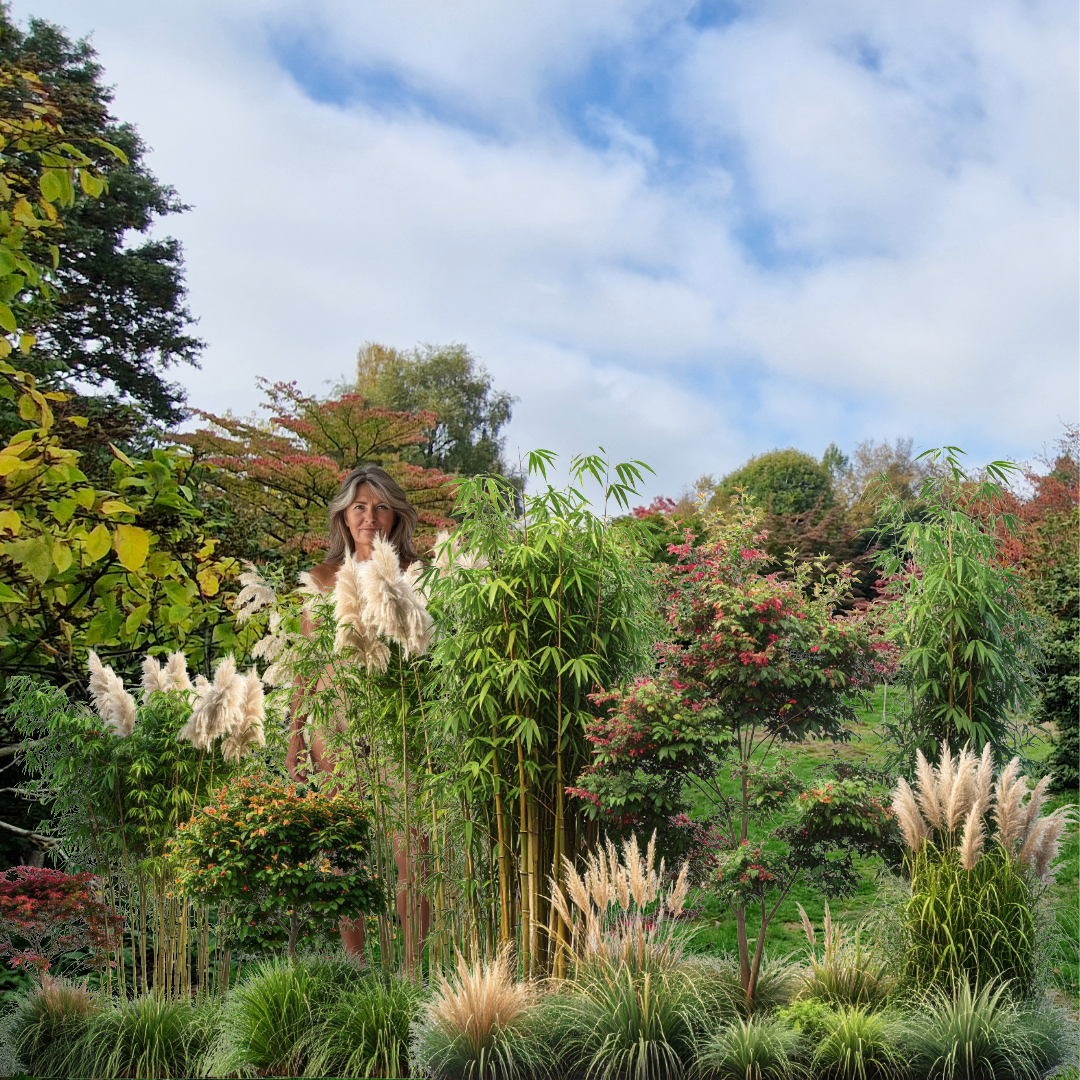
    Tall plants are excellent features to incorporate. Whilst there may be limits to the height of fences that you are allowed to erect, there are far fewer restrictions on plants. Hedges, feature trees, shrubs and tall grasses such as bamboo (take care with bamboo – some species can be invasive) are good choices. They can even be planted in pots and moved around.

    Composite image showing a garden with the figure of a nude woman standing behind a dense cluster of tall plants
    Obscured by plants

    Try to use a variety of species, as that will be more naturalistic and biophilic – as well as more interesting.

    Consider the existing plants in your neighbourhood – are there any planted in the area that are already site-line blockers if you reposition yourself?

    Photograph of trees and shrubs in gardens, successfully blocking views from windows
    These trees and shrubs are all in neighbouring gardens, but they are very effective at blocking views from overlooking windows

    Plants are much better than solid structures to provide shelter – they are permeable to light and air. They slow down wind speed and reduce turbulence and the sound of the breeze through foliage provides a non-rhythmic soundscape that can help mask intrusive noises.

    Screens, parasols and shades

    You don’t need solidity and density – and this applies to plants as well as to manufactured products. Materials and structures that break up outlines rather than blocking them entirely are ideal, especially if they contrast in colour or brightness.

    Slats, lattices and mesh allow light and air to pass through them, but can be very effective at blocking views into your space.

    Diagram showing how a slatted fence can completely obscure a view whilst still letting light and air pass through it
    Diagram showing how a slatted fence can completely obscure a view whilst still letting light and air pass through it

    The diagram above shows how site lines can still be permeable to the air and light, but still obscure the view, and the image below shows how lattice can be very effective at screening, despite being about 75% transparent. The lattice would be even more obscuring with climbing plants growing up it.

    Image showing how an arrangement of wooden lattice can effectively obscure a view despite being about 75% transparent

    Distraction rather can concealment

    During the First World War, various navies experimented with dazzle camouflage. Instead of trying to hide ships from attackers by painting them in shades of grey, navies painted their ships with bright, geometric patterns that broke up their outlines and made it difficult for an enemy to work out which part of a ship was which, and where it was going.

    A photograph of USS West Mahomet  in dazzle camouflage in 1918.  Downloaded from Wikipedia.  Photograph By an unknown author - This image has been extracted from another file, Public Domain, https://commons.wikimedia.org/w/index.php?curid=18552961
    USS West Mahomet in 1918 painted in dazzle camouflage

    The aim wasn’t concealment, but confusion. The picture here shows a good example of the practice – it takes a few seconds to actually work out which way the ship is pointing and where the front actually is.

    These days, many car manufacturers use similar patterns when testing new models so that the outline and features of their cars are hard to pick out – especially if photographed when they are moving.

    High contrast, bold shapes, reflective surfaces and the positioning of focal points away from where you will be naturally draws the gaze of an observer away from you and towards the distraction.

    Time shifting

    If you can use your space at times when potential onlookers aren’t around, then that can be an opportunity. Having said that, with so many people working from home these days, it is much more difficult to predict when those times might be. Even if you think you know the habits of your neighbours, you do risk being caught out on occasion.

    If you know your neighbours, you can always talk to them – there may be nothing to consider at all.

    Want some advice? Get in touch

    If you would like some advice on designing an aletheic, biophilic space – indoors or outside – please get in touch. We can discuss basic principles or you could book a formal consultation, either in person, or on-line.

    ← Back

    Thank you for your response. ✨

    Thank you for your response – we’ll get back to you soon.

  • Safe vulnerability

    Safe vulnerability

    In this article I explore the idea of aletheia, or truth revealing, through vulnerability in nature. It emphasizes the liberating yet challenging experience of being completely exposed to, and immersed in nature whilst also being safe. Suggestions on how to foster this connection at home are offered as well as ideas about wild swimming and accessing and creating secluded areas for contemplation.

    Note: This post explores the psychological and wellbeing benefits of naturism within biophilic environments. It contains illustrations depicting nudity and the human form.

    Be a part of nature, not just an observer of it

    The concept of aletheia is all about the process of unconcealment in order to realise a truth about ourselves and our place in the environment.

    By baring all and removing that which separates us from nature we can then truly become part of nature. It is both liberating and challenging to be so exposed. Liberating in the sense of total freedom from artifice and judgement but challenging as you recognise your vulnerability as an individual – just one of over eight billion people – in the vastness of nature.

    That heightened sense of vulnerability can be enlightening and thought-provoking, and maybe even a bit thrilling (much like getting on a roller coaster for the first time). Sometimes, however, the fear of exposure and judgement can override the positive sense of self knowledge. This is why a sense of safety and trust is vital.

    If you know that you are safe and that you won’t be interrupted, then baring all – literally and figuratively – in a natural, or naturalistic, environment can bring clarity to your thoughts and a sense of peace and calm.

    I touched on this experience in an earlier post. Now, I will discuss some of the ways by which you can practically experience safe vulnerability.

    Raw immersion in nature

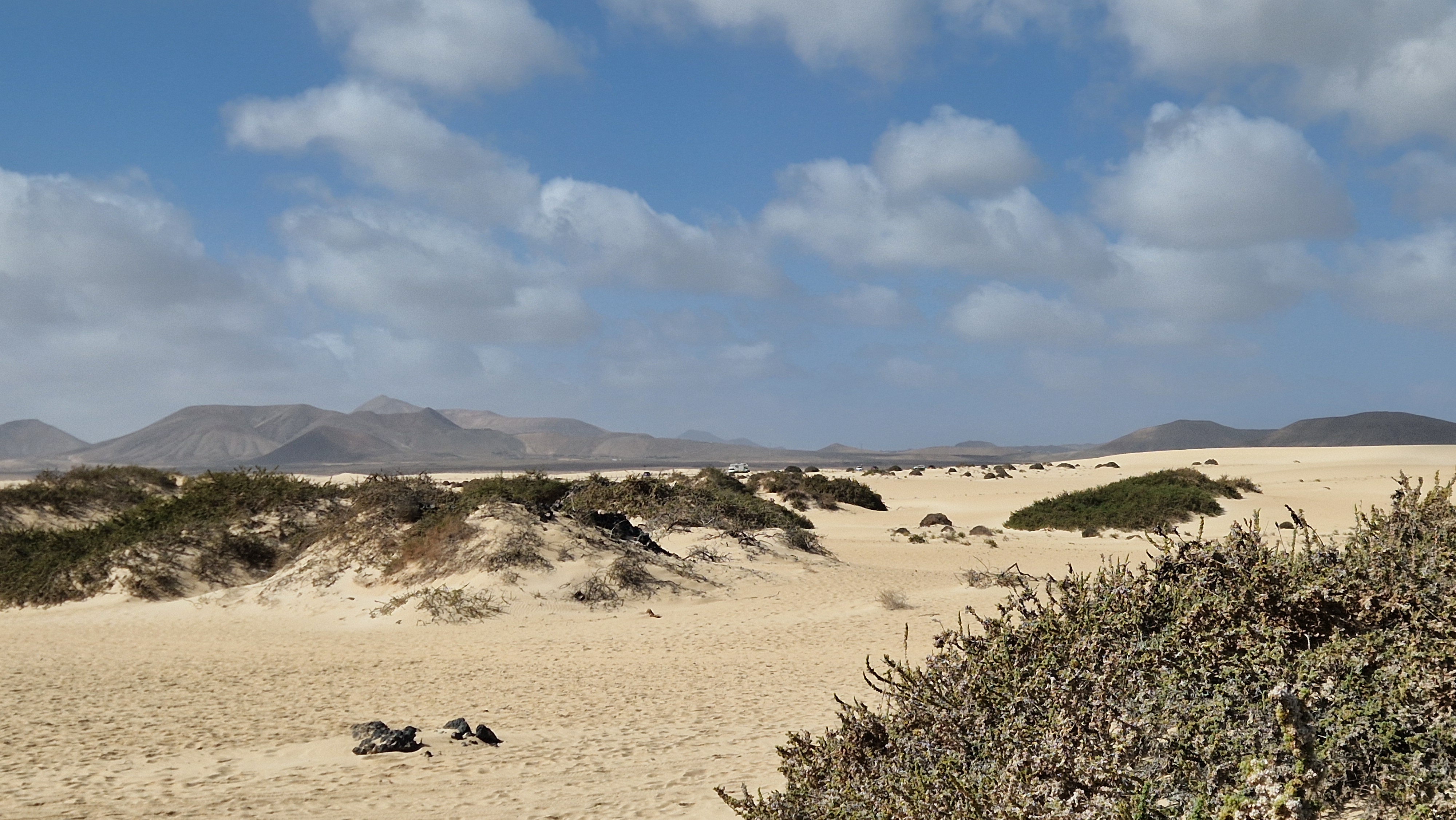
    A view of the Dunes National Park in Fuerteventura, Canary Islands, Spain showing a vast landscape of sand, rocks and mountains in the distance with no people in sight

    There are times and places when being alone in a natural place can be awe-inspiring. Sometimes, just the vastness of a landscape means that it is possible to be away from any distraction from technology or any interruption from another person. It is possible to overlook a landscape and be aware of any ‘threat’ long before it becomes obvious. That sense of being alone and uncovered in the grandeur of nature allows one to appreciate the truth about our place in the environment.

    As well as being immersed in a landscape, immersion in a more literal sense is also worth investigating. Wild swimming has become an increasingly popular activity. Naked wild swimming allows a truly deep connection with the environment and a total sensory experience (although you should always be with someone else, for safety reasons).

    AI-generated image of a middle-aged man wild swimming in a lake and gaining the benefits of immersion in a natural environment

    Sometimes, nature can be more intimate and sheltering. A woodland clearing or a secluded spot on a river bank can provide refuge and shelter and be ideal places to have an aletheic experience.

    An image of some coniferous woodland (tall trees) with a naked male in the foreground contemplating his place in nature. This illustrates an awe-inspiring natural space that is also secluded.

    Often, natural places are busy. After all, getting into nature is good for us and a popular activity. This can make being alone with your thoughts in nature more difficult – especially when you wish to experience it in a raw, unconcealed state.

    If you are lucky enough to have access to private land, with permission, then your opportunities are greater. The chances of being disturbed are lessened and you can immerse yourself in the environment on your own terms.

    Many naturist clubs and associations have areas of wilderness or woodland on their land. My local venue has over 20 hectares of land, and a large part of that is woodland. That is a place where I can find a spot to stop, think and experience benefits such as forest bathing.

    Sometimes, just knowing when a place is likely to be quiet will give you the opportunity that you need. Experiencing the majesty of nature in moonlight can be a profound experience, as can getting to a beach early in the morning to experience the crash of waves onto the shore when no-one else is there.

    ai-generated image of a young, apparently nude, woman experiencing the majesty of nature by moonlight

    Creating a safe space closer to home

    Getting out into nature to experience aletheia is not always easy, especially if you live in an urban area or if transport is not readily available. It is possible to create spaces in and around the home where the feelings associated with safe vulnerability can be achieved.

    AI-generated image of a small space set aside in a garden to provide privacy whilst still being able to experience nature.  The space includes planting, paving stones, a trellis and a pergola

    If you have a garden – even a small one overlooked by neighbours – a secluded nook can be created easily and at a low cost. The careful placement of plants and structures such as a trellis and pergola can provide the safety of privacy whilst still being permeable and open to the elements. Balconies and courtyards can also be planted and screened to increase privacy whilst also bringing nature closer to the home.

    AI-generated image of a balcony of a flat (apartment) with a variety of plants and herbs, as well as screening plants for privacy

    Indoor spaces also provide opportunities for connection to nature in a way that provides safe vulnerability. It is possible to create a simple aletheic space for a very low cost that provides both an immersion in a naturalistic environment with the security of being in one’s own home. It doesn’t even have to be a dedicated room. You can set up a corner in a larger room

    AI-generated image.  A corner of a room with windows screened with sheer voile curtains. Houseplants, armchair and a rug on a wooden carpet. Nude figure standing, looking pensive, through a window on to a view of plants and trees

    The use of screening plants near doors or windows, sheer voile curtains over large windows and large houseplants create the aesthetics and textures. Adding natural scents and a nature-based soundscape from a smart speaker can help to create a holistic sensory experience and really bring a sense of the outdoors into the home.

    The keys to safe vulnerability

    Aletheia is the experience of revealing truth about ourselves and our environment through stripping away artifice and the unnecessary. It is about authenticity. Sometimes, however, we have to simulate an environment in order to experience the fleeting sense of vulnerability – the butterflies in the stomach – that can lead to a deeper understanding of ourselves.

    In the environments where we live and work, this might require some forethought. Privacy might be an issue, or the risk of distractions from people or – more likely – our phones.

    These can all be overcome, often with little cost attached. The key is understanding how to use places and time to their best effect.

    Contact me for advice about your own space and how to create an aletheic environment?

    ← Back

    Thank you for your response. ✨