aletheic environments

biophilic environments that awaken your senses

Category: Wellbeing

  • Winter is on its way

    Winter is on its way

    … or how an intersection between Greek and Danish philosophies might improve our wellbeing

    In this post, I explore the interactions between Greek concept of aletheia and Danish idea of hygge as tools for enhancing wellbeing during winter, looking at how creating a cosy environment fosters introspection, authentic connections, and a deep appreciation for sensory experiences.

    Note: This post explores the psychological and wellbeing benefits of naturism within biophilic environments. It contains illustrations depicting nudity and the human form.

    We are past the autumn equinox and, even though the weather remains warm(ish), thoughts turn to winter.

    I don’t much like winter. I miss the sunshine and it makes me feel gloomy. I do wonder whether I might experience a mild form of seasonal affective disorder.

    A few years ago, the Danish concept of hygge was popularised. The idea of cosy contentment and hunkering down in a warm room with flames, blankets and subdued lighting can be comforting and a good way to get through the cold, dark months.

    Aletheia, a Greek concept, is about a process of revelation. It is not about finding an unchanging truth, but rather about uncovering something that was previously hidden or obscured.

    In the context of a cold, dark winter, this could mean a few different things

    Uncovering inner truths

    The introspective nature of winter, with its shorter days and more time spent indoors, naturally encourages quiet reflection. Hygge, with an emphasis on warmth, soft lighting, and stillness, creates the ideal physical environment for this kind of ‘un-forgetting’. If you consciously create a comfortable, safe space, you are better able to let go of distractions and consider deeper thoughts and feelings that might be buried beneath the busyness of the other seasons.

    The truth of a moment

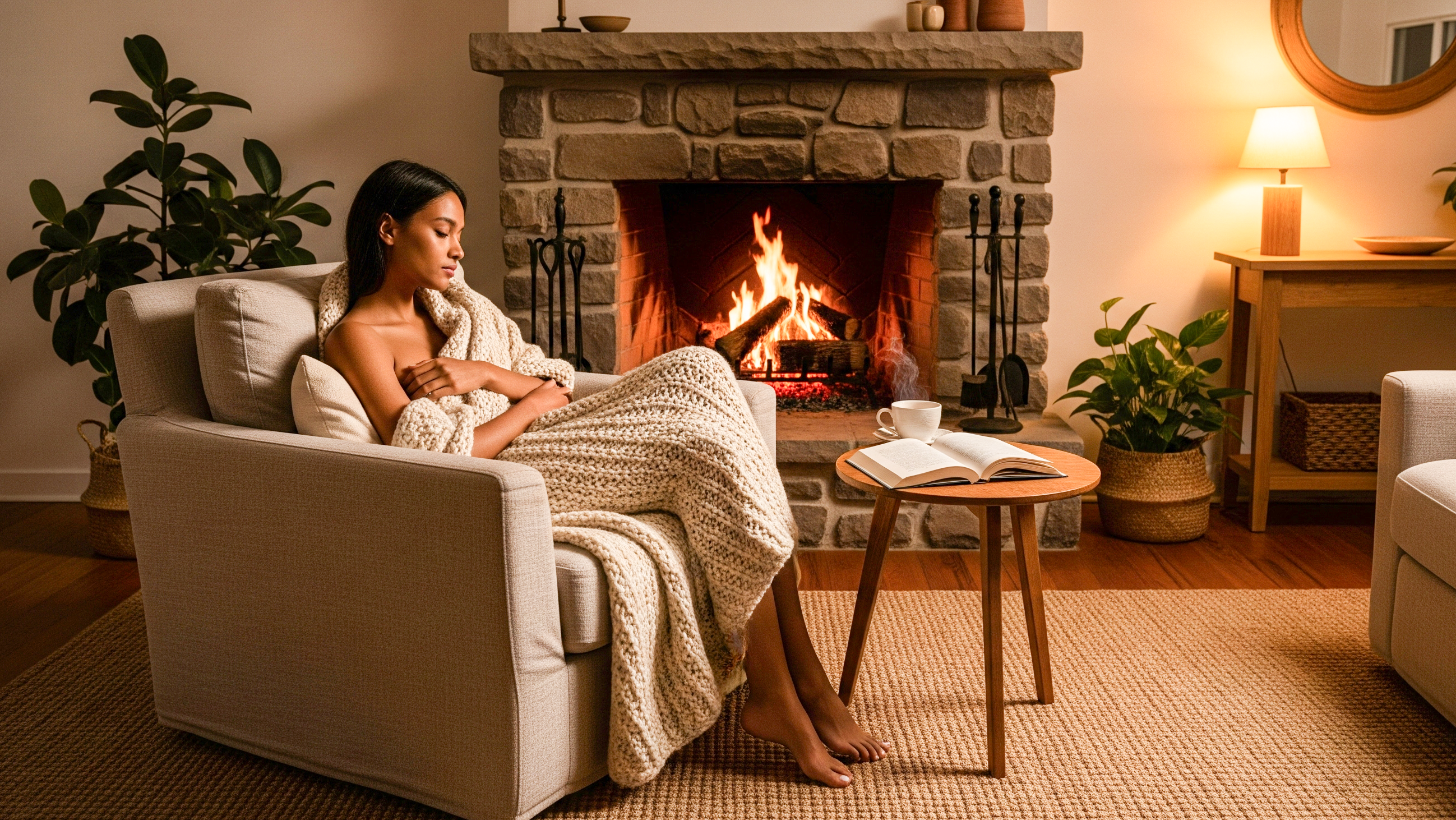
    ai-generated image of a young woman, wrapped in a blanket, sitting on an armchair next to a fireplace experiencing warm, cosiness and relaxation

    Hygge is fundamentally about being in the moment. This could be as simple as experiencing the warmth of a fire, the taste of a hot drink or the comfort of a blanket. This is a form of aletheia. The truth being uncovered is not a grand philosophical statement, but the simple, profound reality of a specific sensory experience. The cold weather outside serves as a stark contrast that highlights and uncovers the preciousness of the warmth and comfort inside.

    Uncovering our nature through human connection

    Hygge often involves shared experiences with friends and family. Intimate gatherings around a table or fireplace might lead to people having more open and honest conversations. In this context, aletheia is the uncovering of mutual understanding and the deepening of relationships. The shared experience of being together in a cosy, protected space can allow for a more authentic form of connection to emerge.

    Aletheia, biophilia and hygge

    I have a professional interest in biophilic design, so this intersection is very more compelling to explore. The choices you can make in creating a hygge-inspired space, such as the materials, the lighting, the arrangement of plants, are not just about aesthetics. They are a deliberate process of uncovering the potential for a space to be a sanctuary. The truth you are revealing is that a human-made environment can be a profound source of well-being and connection to nature, even when the natural world outside is dormant or unwelcoming.

    So, where are the intersections and what do they look like?

    I think very visually. I like diagrams and I often imagine and describe things as shapes and colours. So, I tried to create a Venn diagram of the relationship between aletheia, hygge and biophilia.

    Venn diagram (which can be downloaded as a pdf by clicking on the link below) showing the intersections of aletheia, biophilia and hygge

    I know that this is not especially easy to follow on a screen, so feel free to click on the link and download it. I will also explain it here.

    These are some of the aspects of each of the three concepts in very basic terms.

    Aletheia (uncovering truth, unforgetting, unconcealing)

    • Introspection and self-reflection. Confronting inner thoughts, understanding one’s character, intentions.
    • Authenticity. Stripping away artifice, being genuine with self and others.
    • Clarity and insight. Gaining deeper understanding, seeing what’s essential.
    • Presence. Being fully aware of the current moment and its realities.
    • Revelation of nature’s cycles. Understanding life, dormancy, resilience.
    • Truth of human connection. Deepening relationships through shared vulnerability.

    Biophilia (love of life and connections with nature)

    ai-generated image of a person enjoying sitting on a chair in a conservatory overlooking a dull autumnal day with cloudy skies and rain
    • Sensory coherence. Engaging all senses with natural stimuli (sight, sound, smell, touch).
    • Natural light and views. Maximizing natural light, connecting to external landscapes.
    • Natural materials and textures. Incorporating wood, stone, water features.
    • Plants and greenery. Indoor plants, conservatories, gardens.
    • Patterns and forms in nature. Fractals, organic shapes, natural rhythms.
    • Sense of place. Environments that evoke natural settings and processes.

    Hygge (cosy contentment and wellbeing)

    ai-generated image of a woman,  wrapped in a blanket, sitting on a rug on the floor near an open fire in the living room. There are natural materials and wooden furnishings as well as a pile of logs.
    • Warmth and comfort. Soft blankets, cushions, fires, gentle heating.
    • Atmosphere and ambiance. Soft, layered lighting (candles, lamps), quiet sounds.
    • Presence and mindfulness. Appreciating simple pleasures, being in the moment.
    • Social connections. Shared experiences with loved ones, community.
    • Safety and security. Creating a sanctuary, a protected space.
    • Simplicity and decluttering. Focusing on what is useful for comfort, without it being distracting.

    What happens in the middle?

    When you get to the middle of the Venn diagram and look at Aletheia X Biophilia X Hygge, what do we find?

    Holistic wellbeing

    The combination creates an environment that supports physical comfort, mental clarity, emotional authenticity, and a deep connection to the natural world.

    Mindful nature immersion

    By creating cosy, nature-rich meditative spaces, you can encourage deep, present-moment reflection and the uncovering of personal and universal truths.

    Winter sanctuary for revelation

    To get a more complete connection with nature, try and adapt spaces such as a conservatory to offer warmth, natural beauty, and a safe, freeing environment for introspection and genuine connection during the dormant winter months.

    Naturism as an extension of hygge

    While hygge often focuses on being cosy and wrapped up, nudity presents a compelling alternative perspective. It is a way to achieve a feeling of comfort and contentment by embracing vulnerability and freedom.

    Comfort in one’s own skin

    Hygge is about creating a space where you feel completely comfortable. For a naturist, this includes being comfortable in one’s own skin. A warm, comfortably-lit living room with natural textures provides the perfect environment for this. To experience a sense of comfort that is not dependent on external layers of clothing, a form of naked hygge.

    Simplicity and presence

    Both hygge and naturism champion simplicity. Hygge focuses on the simple pleasures of life, and naturism removes the complication and consumerism associated with fashion. This shared emphasis on simplicity makes it easier to be present in the moment and appreciate the authentic truth of an experience.

    Naturism as an aletheic experience

    When you are in your sanctuary you are not on show. The people you are with (if not enjoying solitude) are those that you are close to and who you choose to be with. Being naked in a biophilic, hygge space allows for the ultimate un-forgetting of societal artifice, fostering body acceptance and a direct, authentic sensory connection to a nature-inspired sanctuary.

    Nudity is a powerful, practical extension of both aletheia and hygge. It is a way to achieve the desired state of comfort and wellbeing, not just a lifestyle choice.

    The key connection is that naturism is fundamentally about truth and authenticity. Uncovering the body strips away the layers of clothing that can serve as both physical and social barriers.

    Uncovering truth

    In the context of aletheia, naturism is a profound act of truth telling. It challenges the societal norm that our bodies should be hidden, uncovering a more authentic self-image.

    Truth of self

    Unclothed, you confront the truth of your own body, without the adornments and artifice of fashion. This can lead to a deeper sense of self-acceptance and body positivity.

    Truth of connection

    In a social setting, naturism removes a major psychological barrier. Without the social cues and judgments that clothing can impose, people can interact on a more fundamental, human level. This can “uncover” a truer, more egalitarian form of human connection.

    Truth of nature

    I am not at all religious, nor even spiritual. However, as both a humanist and a biologist, I appreciate the organic and natural world and I am always very conscious that we are an integral part of nature, not just a bystander.

    Naturism is a direct way to dissolve the boundary between the person and the natural environment. Being outside in a garden or a natural space without clothing – even for the briefest of time in winter – can create a profound sense of integration and belonging, a physical expression of biophilia. A few minutes of enveloping your body in fresh, crisp air reveals the simple truth that you are a part of nature, not separate from it.

    AI-generated image showing the head and torso of a nude man standing outside on a crisp, winter morning

    When you combine aletheia, hygge, biophilia and naturism in your home, you are not just creating a cosy space. You are building a sanctuary that actively promotes self-acceptance, authentic connection and a deeper, more truthful relationship with both your body and the natural world.

    Moving from the philosophical to the practical – how to create an aletheic hygge space in the home

    The living room is the perfect place to start, as it is often the heart of the home and a space for both solitary contemplation and shared connection. Combining aletheia and hygge in a living room means creating an environment that is not just cosy, but also revealing of natural truth and human well-being.

    Here are some practical ideas for your living room, broken down into key design principles:

    The aletheia of light

    Winter can be a time of darkness, but light is a key element of both hygge and aletheia. The truth of the outside world is found in the limited natural light, and aletheia indoors is about a conscious revelation of light in your space.

    Let’s start by making the most of what natural light is available. It might be limited, so try and squeeze as much benefit out of it as possible.

    Position furniture to take advantage of any natural light coming through windows and use mirrors opposite windows to reflect and amplify the light you do have. This is a subtle yet powerful biophilic principle. Even on a grey day, you are consciously acknowledging and maximizing the natural world outside.

    Make use of technology. Smart lighting can be a real boon at this time of year. Intensity and colour temperature can be adjusted, and even automated, to complement the changing conditions outside and if you get it right, the connection between indoors and out can become almost seamless. This not only looks better (as the tone of the light from natural and artificial sources can be matched), but it might reduce eye strain too.

    Placing lamps behind objects, such as furniture, so that it washes the wall or ceiling with light rather than being directed into the room can also be calming and is also more naturalistic.

    A light placed at the back of a shelf washing the wall and ceiling with soft, warm light to proved gentle illumination and minimizing glare

    Next, especially in the evenings, consider layered lighting. Instead of using, harsh overhead lighting, use multiple sources, such as table lamps, with warmer toned bulbs. Think about adding a floor lamp near your favourite armchair, a table lamp on a side table, and even a cluster of candles (including the very realistic LED flame versions) on the mantlepiece or a coffee table. The soft, shifting glow of candles is an excellent way to create a warm, calm atmosphere.

    ai-generated image of a group of three candles on a mantelpiece above a fireplace

    The biophilic truth of texture and materials

    Our connection to the natural world is fundamental, and biophilic design is all about recreating some of those links in the artificial environments of buildings. This can be expressed through the materials that are used.

    Tactile textiles are a good place to start. Layering is key for both visual warmth and physical comfort and for breaking up the harsh shapes created by straight lines and sharp corners.

    A chunky knitted woollen throw draped over the sofa, a pile of textured cushions, and a deep pile wool rug would both look and feel warm. Natural colours will add a biophilic touch as well. These textures encourage you to physically engage with the space and feel the comfort. The feelings are definitely amplified and more sensual when naked.

    Natural materials that tell a story of their origins are a good way of reconnecting with nature during the cold, damp months of the year. Wooden furniture, a wicker basket for blankets, or a stone or ceramic vase all bring a sense of the outdoors in. The ‘truth’ revealed here is that these elements are not just decorative – they are part of a larger, living system. You might even consider collecting some winter elements from outside, such as logs for the fireplace or a simple arrangement of pinecones and evergreen branches.

    Horticultural aletheia: bringing life indoors

    In winter, when the garden is dormant, the truth of nature’s persistence can be revealed indoors. Houseplants grouped together can create a mini-ecosystem. Wall mounted planters or moss panels can bring vegetation to eye level. Choose plants that are tolerant of low light levels, and consider a variety of textures and sizes to create a naturalistic look.

    Photograph of a group of houseplants

    As well as house plants, consider some seasonal botanical displays. Cut winter branches, dried grasses, pine cones, seed pods or even a small basket of nuts are all worth considering. The beauty of these elements is in their stripped-back, honest form. They remind us that even in stillness, there is a quiet, powerful life force.

    ai-generated image of a wooden bowl full of a variety of nuts on a sideboard

    The human truth: hearth and sanctuary

    Finally, the living room should be a sanctuary for the human experience. Hygge is about creating a space for this, and aletheia is about the profound truths that can emerge within it. So, it makes sense to be comfortable.

    Create a cosy nook with a comfortable armchair and a small table for a book and space for a hot drink or a glass of wine. It’s a place designed for introspection and quiet contemplation, where you can be alone with your thoughts.

    If you have a fireplace, it’s the natural heart of the room – a literal hearth. If not, you can create a similar focal point with a well-curated bookshelf, a gallery wall of art, or a collection of cherished objects. These elements tell the truth of your identity and your journey, making the space uniquely your own and a place for genuine self-reflection.

    Photograph of a woodburning stove in a hearth

    By combining these elements, your living room becomes more than just a place to escape the cold. It becomes a space where the sensory comforts of hygge facilitate the deeper process of aletheia, uncovering the truths of nature, beauty, and your own inner world.

    Need some advice?

    Get in touch for advice on creating a snug, biophilic and aletheic nook in your home to get through winter.

    ← Back

    Thank you for your response. ✨

  • A space for meditation

    A space for meditation

    Reflections on the ups and downs I experienced post-pandemic, and how meditation has helped my mental health. Through personal insights, I discuss finding peaceful spots for meditation, both outdoors and indoors, and suggest creating calming environments with natural elements. The potential benefits of nude meditation and the role of wellness spaces are also highlighted.

    Note: This post explores the psychological and wellbeing benefits of naturism within biophilic environments. It contains illustrations depicting nudity and the human form.

    A period of change

    The last few years have had their ups and downs for me, and for many others as we emerged into our post-pandemic world of seemingly ever more uncertainty. New ways of working and the stresses of a high cost of living have taken their toll on mental health.

    Now, I am not a therapist, and I don’t pretend to be able to offer advice, but I can say that taking fifteen to thirty minutes out of my day for meditation has done me the power of good.

    I started with guided meditations (and there are some good sources available online), but now I tend to guide myself. The key is to really notice how you feel, and that includes how your body feels in relation to the space you are in.

    It is possible to meditate almost anywhere, although quiet places are best. When distractions are minimized, and the place where you are meditating is calm, I think the process becomes more effective.

    A photograph of a natural environment - woodland in spring in Southeast England including bluebells and trees

    Connecting with nature

    Connecting with nature makes a positive difference, as that reduces stress before you even start. Just being in a natural environment has been shown to reduce stress and improve wellbeing – even if only for as little as ten minutes a day. Find a quiet spot, notice how you feel and take time.

    Having a literal connection with the Earth and the air can make the experience more profound. If you have access to a place where you can undress and experience nature in your most natural state, then you may uncover more than just your skin. For me, and I can speak only for myself, a state of nudity in nature when meditating reveals not only a connection with nature, but a realisation of our own place in nature.

    An ai-generated image of a naked woman practicing meditation outdoors in a natural environment where a deep connection with nature can be achieved

    Of course, finding such a place to go may be difficult. Not everyone is comfortable with the idea of being naked in a potentially public place (and in some countries, that may also be illegal, although thankfully not in the UK). So, what are the alternatives?

    If you are lucky, you may have a quiet, secluded garden. Being able to step through your back door into your own private space is a luxury, but one that need not be expensive. Some simple screening with plants and the placement of items such as water features or a sculpture can help create a naturalistic feel and still allow a deep connection with nature. A patio or terrace can be put to good use too.

    AI-generated image showing a person meditating nude on a balcony, surrounded by potted plants and featuring a wooden sculpture and water feature

    Indoor spaces

    Meditation should be comfortable and sometimes that means having to avoid bad weather. This is where the principles of biophilic design can be used to create indoor spaces that evoke a sense of being in nature, even when actually being in nature is not practical.

    This means using a combination of elements including using natural materials, plants, natural colour schemes and textures. The most important thing is to be free from distractions and to feel comfortable.

    Meditation is all about noticing how you feel. When it works well, you get into a state of calm, relaxation and mental clarity. Having that interrupted by noise or sudden changes in light or temperature can spoil things.

    In the home, a living room or bedroom can be ideal. So, how could you set about creating an aletheic space for meditation?

    Here are some general principles.

    Mindful decluttering

    Regardless of the room’s primary function, the most crucial step is to keep the space free from unnecessary distractions and clutter, so if possible, keep non-essential items stored away and out of sight when not in use.

    Natural materials and colours

    A palette of subtle, natural colours like warm whites, greens and earthy tones can be relaxing. Use materials such as reclaimed wood for furniture, linen for soft furnishings, and wool or jute for rugs. This creates a calming, organic feel that connects you with nature.

    Layered lighting

    Instead of a single harsh overhead light, use multiple sources. Consider a floor lamp with a linen shade for soft, diffused light, and maybe a small, warm-toned lamp on a side table. This allows you to create a gentle ambiance for meditation that differs from the room’s everyday use.

    A designated zone

    Use a large rug to define the meditation zone. Use furniture, such a s a coffee table, which can be easily moved to the side when you want to meditate.

    Plants

    Incorporate a few large, statement houseplants in nice pots. Their large leaves will not only add a touch of nature but can also serve to create a sense of seclusion and privacy when you sit near them. Moss panels on the walls can also add some biophilic elements – they are tactile, green and also have good acoustic properties.

    Circular wall-mounted decorative panel of preserved mosses and lichens

    The bedroom as a meditative space

    A bedroom is naturally a more private space, making it an intuitive choice for a meditation sanctuary. If floor space is limited, the bed itself can be used. the most important thing is to be able to focus on your feelings without distraction. Natural linen bedding in neutral colours would be ideal.

    Adapting the Space for nude meditation

    Your space should support your meditation practice without feeling forced or exposed, so try to position your meditation spot in a way that provides privacy. Remember, though, that the aletheic concept is also about uncovering something about your own nature in your environment. That slight sense of exposure or vulnerability can be quite revealing, so while protecting your own privacy, don’t lock yourself in.

    AI-generated image showing a naked person meditating in a room inside a house, showing plants, furnishings made of natural materials and a neutral colour scheme

    The careful placement of plants can provide a sense of seclusion and privacy while allowing light to permeate the space through the foliage.

    Using foliage near windows and light sources can also create wonderful shadows, which can be used to create areas of partial concealment and intimacy, allowing you to feel both exposed to the environment and protected within it.

    Spas and wellness spaces

    Many health clubs, spas and other wellness spaces provide space for meditation. These days, even some workplaces provide wellness rooms (although they are often not used as in some organizations, their use can be viewed as a sign of weakness, which many people do not want to risk).

    I think that there is an opportunity for health spas, hotels and other wellness spaces – beyond existing naturist clubs – to offer space for nude meditation. Not everyone that would use such spaces would consider themselves naturists or be members of a naturist club or society, but may very well wish to take advantage of a space where they could disrobe and make a complete, unconcealed connection with nature.

    This is also an opportunity for naturist venues to widen their offer and open some of their spaces up for focused activities such as solo nude mediation. This could make it easier for some people to consider aspects of naked wellness without having to jump into the full gamut of more traditional naturist activities.

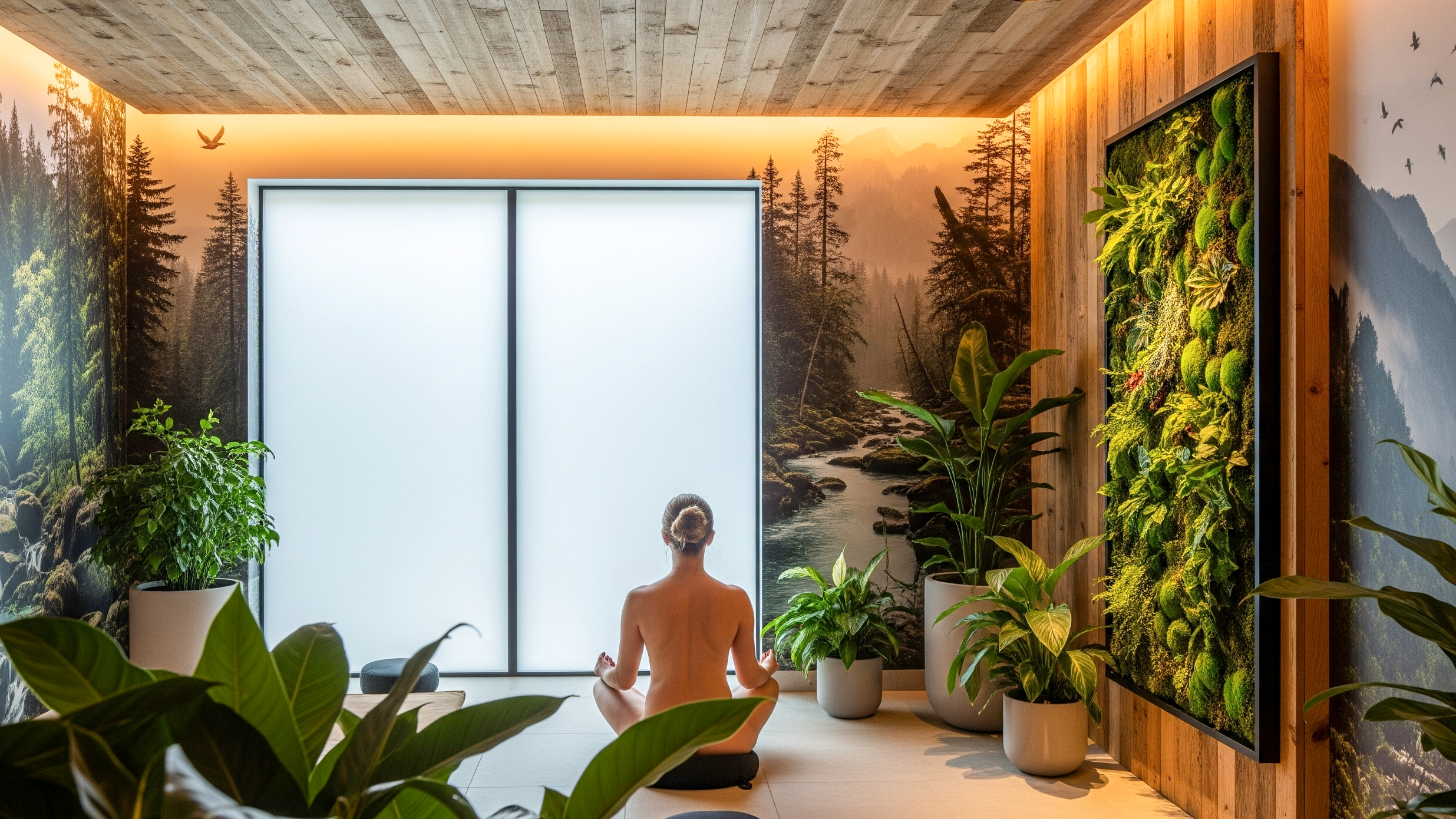
    AI-generated image showing a person meditating in a designated aletheic space in a wellness spa / health club

    Interested in an aletheic space for your home or naturist club?

    Get in touch to book a consultation and let’s design a calming, authentic environment together.

    ← Back

    Thank you for your response. ✨

  • Forest bathing: a naked embrace with nature

    Forest bathing: a naked embrace with nature

    Forest bathing, or Shinrin-yoku, enhances well-being by immersing oneself in nature, reducing stress and anxiety while boosting mood and cognitive function. Usually practiced clothed, nudity may deepen the connection to nature. Ultimately, the goal is to connect with the natural world, promoting joy, peace, and personal renewal.

    Note: This post explores the psychological and wellbeing benefits of naturism within natural and biophilic environments. It contains illustrations depicting nudity and the human form.

    Forest bathing, or Shinrin-yoku, is a Japanese practice that involves immersing oneself in a forest environment, aiming to improve overall wellbeing. This therapeutic activity has gained significant traction worldwide, with scientific studies increasingly validating its numerous benefits.

    While the concept of connecting with nature is universally appealing, there is a growing movement to carry out this activity naked as a way to amplify the restorative powers of forest bathing. 

    Restoration and relaxation

    The allure of forest bathing lies in its ability to reduce stress and anxiety. Studies have shown that spending time in nature lowers cortisol levels, the hormone associated with stress. The forest environment, rich in phytoncides – volatile organic compounds emitted by trees – has been linked to boosting the immune system and improving mood. Recent research has also shown how trees radiate beneficial near infrared radiation as well.

    Furthermore, the soft, earthy hues, the gentle rustling of leaves, and the melodious bird songs create a serene atmosphere that promotes relaxation and mental clarity. 

    Moreover, forest bathing has also been shown to enhance cognitive function. Research suggests that spending time in nature can improve attention, memory, and creativity. The absence of digital distractions and the opportunity to engage with the natural world offer a much-needed respite from the constant stimulation of modern life. Studies have also indicated that forest bathing can lower blood pressure, reduce the risk of heart disease, and improve sleep quality.

    While these benefits are undeniable, there is also a compelling argument for incorporating naturism into the forest bathing experience.

    Complete immersion

    Nudity, often associated with vulnerability and authenticity, can deepen the connection with nature. By shedding societal constructs and physical barriers, individuals can fully immerse themselves in the forest environment, allowing their senses to be heightened. The absence of clothing can reveal a sense of freedom and liberation, promoting a deeper state of relaxation. 

    An image of a person experiencing the benefits of forest bathing whilst naked.

    Furthermore, naturism facilitates a more intimate connection with one’s body. By accepting and embracing one’s physical form in a natural setting, individuals can develop a healthier body image and self-esteem. The experience of being naked in nature – the ultimate act of aletheia, or truth-revealing – allows the body’s true unity with the environment to be revealed, breaking down the artificial boundaries between humans and the environment.

    The idea of nude forest bathing may be confronting for some. Cultural norms and personal comfort levels vary greatly, so the decision to embrace naturism is entirely personal. Forest bathing is certainly beneficial with clothing, but my personal experience suggests that it can be much better without. The core principle is to find a way to connect with nature in a way that promotes well-being.

    It is wise to choose a secluded and private forest location and it might be a good idea to join an organized group if you are a novice or a bit nervous about the idea.

    Forest bathing can be a powerful tool for enhancing physical and mental health. By immersing oneself, totally, in the natural world, individuals can experience a range of benefits, from stress reduction to improved cognitive function. The absence of clothing maximizes the absorption of beneficial far red and near-infrared wavelengths (radiated by trees and sunlight) across the body’s largest organ (the skin).

    While clothing is not a barrier for enjoying the forest environment and the benefits of forest bathing, naturism offers a unique opportunity to deepen the connection with nature and oneself. Ultimately, the most important aspect is to find a way to connect with the natural world in a way that brings joy, peace, and renewal.

    And for those who are open to exploring naturism, forest bathing could be the perfect gateway. Short, gradual exposure to nudity in nature, maybe in private, will help build comfort and confidence.

    Disclaimer: This article is intended to provide information and does not constitute medical advice. It is essential to consult with a healthcare professional before making significant changes to your lifestyle or engaging in any new activities.

  • What on earth is an Aletheic environment?

    What on earth is an Aletheic environment?

    An aletheic environment is a space intentionally designed for unconcealment – stripping away the artificial to create an authentic, unfiltered connection between people and the natural world.

    Aletheia is a Greek term for truth or unconcealedness. It is pronounced al-er-thee-ah

    In philosophy, Aletheia is one of the primary Greek words for truth. However, its meaning is distinct from a simple fact or statement. It refers to a state of being revealed or unconcealed. Truth, in this sense, is not something you make or construct, but rather something that exists and is brought into the open or un-hidden.

    An aletheic space is intentionally unconcealed, authentic, and revealing.

    It is a place that strips away the artificial and the inessential to reveal a deeper truth – both about the natural world and about ourselves.

    This could mean a space that is designed to help its users reconnect with their natural place in nature. It could also be a place for or being in, or taking part in activities, that can reveal more about our own nature.

    Unfiltered connection

    Aletheic spaces are where the barriers between the occupant and the natural environment are minimised or eliminated. They are spaces where all of our senses are stimulated to uncover the whole truth about where we are and what we are doing.

    For an activity, it could simply be a natural environment where a true connection between the person and their surroundings can be unconcealed. It might be something as simple as taking exercise in nature rather than a gym, meditation in a garden or the practice of forest bathing.

    For a building, this could involve incorporating elements of biophilic design. This is where a sense of nature is brought into the built environment by incorporating views of nature, plants and living walls that make the boundaries between inside and outside disappear, soundscapes and scents, or materials in their raw, honest form like exposed wood or stone.

    Honesty in design

    An aletheic space would be authentic. It would not rely on superficial decoration to appear natural, but would be created with materials that are true to their function and with a design that connects people with nature and and environment.

    In essence, a standard biophilic space might add plants for well-being, but an aletheic environment would be designed to make you feel completely connected to your space and the wider natural world, in the most genuine and unfiltered way possible.

    A space for uncovering

    Most importantly, an aletheic space would be a place where the occupant themselves feels free to be “uncovered” and authentic. It would be a space with an atmosphere of safety, trust, and liberation. A space to become unconcealed and where one’s natural, naked, state is celebrated, allowing for the deepest possible connection to the environment. A space where you stop being an observer of nature and become a part of it.

    Monochrome AI image of naked person entering a forest clearing, demonstrating an unconcealed connection with nature in an aletheic environment.

    FAQs

    What is biophilia?

    A good definition of biophilia is the innate need for humanity to connect with, and be a part of, nature. From an evolutionary point of view, the sense of ease and comfort we get when we are connected with nature can be explained by being in an environment where our senses tell us that we are safe.

    What is biophilic design?

    Biophilic design is a design principle that is inspired by nature and incorporates natural and naturalistic elements into buildings and the wider built environment with the intention of improving wellbeing. An easy-to-understand (and almost definitive)guide to the principles of biophilic design can be found here.

    What is naturism?

    Naturism is a way of life in harmony with nature characterised by the practice of communal nudity with the intention of encouraging self-respect, respect for others and for the environment. (INF-FNI definition).

    What do you mean by ‘complete immersion in nature?’

    Removing the barrier of clothing to our skin offers an unparalleled level of total sensory immersion. It intensifies the connections with nature and our environment. The feeling of air, sunlight, bare earth and the weather directly on the skin promotes a deeper sense of tranquility, mindful awareness, and interconnectedness. This enhances mental restoration beyond the baseline benefits of nature exposure alone.

    What is the difference between a biophilic space and an aletheic environment?

    Aletheic spaces are where the barriers between the occupant and the natural environment are minimised or eliminated. They are spaces where all of our senses are stimulated to uncover the whole truth about where we are and what we are doing. They can be natural, but where access to nature is limited, they can be designed.

    When designed and part of the built environment, they are places for more than just for doing stuff in (or for getting a credit on a checklist), but are places where restoration, sensory coherence and mental clarity can be given every opportunity to occur. It would be a space with an atmosphere of safety, trust and liberation.

    Most importantly, an aletheic space would be a place where the occupant themselves feels free to be uncovered and authentic.