
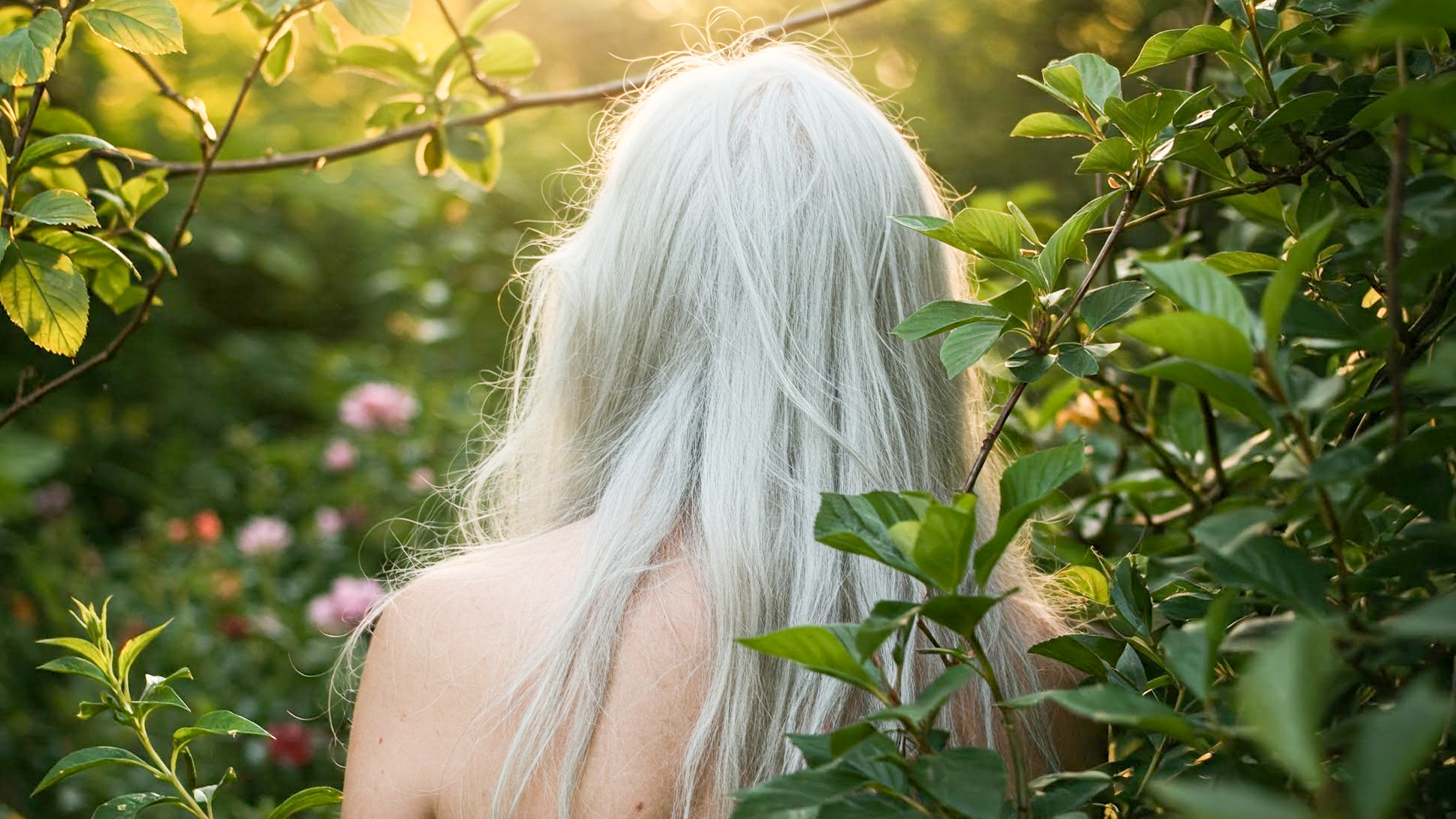
The post discusses how ageing affects our perception of our bodies and surroundings. It highlights a study on care home design, revealing older residents prefer bold decor to counter declining sensory acuity. Additionally, the author reflects on personal sensory experiences and suggests creating enriched, natural spaces for older individuals to enhance their well-being.
Note: This post explores the psychological and wellbeing benefits of naturism within biophilic environments. It contains illustrations depicting nudity and the human form.
In a recent post on the truth about bodies, I wrote about how, as our bodies continue to support us as we age, we can appreciate them more honestly and truthfully. We accept that although we might not perceive ourselves to be as attractive as we were in our youth, we can wear the signs of ageing as a visible record of the remarkable abilities of a collection of ever changing cells, tissues and organs to keep us alive.
Many changes that come with older age happen relatively quickly, or at least noticeably. We become more susceptible to the effects of injury, recovery may take longer than when we were younger, aches and pains feel more severe and our movements become slower.
Gradual decline – we rarely notice it
However, the decline in our sensory acuity is much more gradual, and often isn’t noticeable until the decline reaches a point when you realise that world seems different.
About 20 years ago, I was involved in some research that included a re-design of the interior of a care home for older adults. The aim of the project was to see whether giving the residents the final say in the design of the communal areas, more people would use them, instead of retreating into their own private spaces.
The project, which was part of a wider academic study into identity realization carried out by the University of Exeter, was very simple. The residents were asked to choose a selection of plants, planters and art that would decorate the communal lounge. There would be no changes to wall colours, carpets or furnishings – these were typical of many care homes and featured a lot of chintz, muted tones and floral patterns.
The choice of plants, planters and art was pretty diverse, ranging from popular houseplants through to more exotic and ‘architectural’ specimens. The planters came in a wide range of colours and shapes and the art included botanical prints, nature scenes, local landmarks and a selection of more abstract subjects.
The final selections came as a surprise to the researchers. We had all expected the residents to choose items that would fit in with the existing decor and ‘play it safe’.
They didn’t.

The plants had bold, architectural foliage and were planted in bright, colourful planters in contemporary geometric shapes. The artwork was heavily biased towards abstract patterns. Even the botanical subjects were composed in a bold style.
What was going on?
Simply put, the residents wanted something that stood out against the background. Colour vision and acuity diminish with age, and the conventional care home style – which looked fine to the young interior designers, even if a little cliched – was just a sea of beige swirls and dull shapes. Bright colours and bold shapes made the space more interesting and, also, their own.
After thinking about this for a while, it all made sense. As a youngster, I used to visit my grandparents and was always a little shocked by how they had set up the pictures on their televisions – the colour balance always looked terrible to my young eyes, but for them, this was just a way of overcoming the natural ageing of the cornea.
It’s not just vision that changes as we age. Our senses of smell, taste and hearing change as well.

I am 60 years old and I have noticed that things have changed. Sometimes, it is as a result of my young adult children hearing things that I can’t or detecting smells at much lower concentrations. The differences aren’t huge – yet – but I am sure that the gaps in our sensory acuity will widen over time.
A deliberate effort to notice
I also make a conscious effort to notice the sensory stimuli that I experience and get a great deal of pleasure in that. I like to spend time in enriched environments and, as a naturist, my whole body experiences sensory stimuli. I am able to interpret what is going on effortlessly as those sensory stimuli enable me to build a coherent mental picture of the space that I am in.

Interestingly, the largest demographic group amongst naturists is the over-50s. Is this because we have more time on our hands, or grew up in a more permissive society? Some of us have reached a stage in our lives where it matters less what other people might think of us than it used to. After all, we become a lot more aware of our mortality as we age, so we might want to pack in as many new experiences as we can before it becomes too difficult.
Or is it because nudity just helps us to feel more alive and connected to our environment?
The Aletheic overlay
An aletheic environment is one where we can shed artifice and the social armour that society deems to be normal and proper. They are spaces where we can discover more about the truth of our own experiences and our surroundings.
We can’t always be in nature. Sometimes, the weather is against us (at the time of writing, we are in yet another heatwave in Southern England). Sometimes, we have to travel to get to a natural space. In those cases, we have to use our domestic spaces.
So how can we create an aletheic space that is especially suitable for older people?
Biophilic design is one crucial element – the connections with nature and the coherent sensory environment facilitate an unencumbered experience when we can really notice how we feel.

Biophilic design is, however, often quite ‘gentle’ as a design aesthetic, so the sensory elements need to be amplified. So, as well as considering the classic patterns of biophilic design – discussed many times on this web site – think about:
- Choosing a colour palette that includes greater contrast
- Use bolder patterns, stronger outlines and shapes that don’t blend in to the background too much
- Plants could be more ‘architectural’ in style. Plants with large leaves and well-defined shapes will stand out against its backdrop
- Textures – especially on the floor – could be more varied and interesting
- Scents and sounds may need to be strengthened and made slightly less subtle
All of these are possible whilst maintaining a naturalistic, biophilic feel – they just need the designer to think beyond their preconceptions about ageing.
My previous posts on Radical comfort, meditation and even home working give some useful design tips on creating an aletheic environment in the home. I have also written about how to make the garden an aletheic space and how to use water as a sensory experience as well as for hygiene. All of these articles will provide some inspiration. For older people, it may be a case of amplifying the sensory elements, or maybe just experiencing environments differently.
Need some advice on creating an aletheic environment?
Get in touch


