Tag: wellness

  • Wellness rooms in the workplace: they don’t always work, but they could

    Wellness rooms in the workplace: they don’t always work, but they could

    Modern office buildings often feature wellness rooms intended for employees to decompress, yet these spaces are frequently underutilised due to poor design, discomfort, and stigma. Effective wellness rooms require thoughtful sensory considerations, including privacy, space, lighting, and decor, fostering a culture of wellbeing rather than mere compliance.

    Note: This post explores the psychological and wellbeing benefits of naturism within biophilic environments. It contains illustrations depicting nudity and the human form.

    Ticking a box, or doing some good?

    Many modern office buildings incorporate ‘wellness’ rooms – places where office workers can go and decompress for a little while if stressed, overwhelmed or just in need of a few minutes of freedom from an annoying colleague or frustrating boss.

    These spaces are often quite small, sited away from the main office space and often never used. They allow HR departments to claim that they take employee wellbeing seriously and might even result in a tick in box on wellbeing rating checklist or a favourable comment on Glassdoor, LinkedIn or a job board.

    There are many reasons why they are hardly ever used.

    • They can be hard to find
    • They might be uncomfortable or poorly designed
    • They might double up as places for prayer, which might make some people worry about breaking a taboo by using them for other purposes, or worry about when the room might not be available
    • Their use might carry a stigma.

    It is the last point that really needs addressing

    If someone is absent from their desk and their manager asks where they are, going to the wellness room can be seen as sign of weakness.

    Or laziness.

    When wellness rooms are nicknamed ‘Crying Rooms’, which I have come across, then it is clear that there is something wrong with the culture of the organization. When the privacy of a wellness room actually makes you more noticeable – because you are not where you are expected to be – then it isn’t really a private space.

    So, what is the solution?

    The most obvious solution is to ensure that the workplace is civilized. This means creating a corporate culture based on great leadership, trust and autonomy. Good corporate culture has the single biggest influence on psychological comfort and wellbeing.

    However, even in organizations with great culture, there may be situations when one might need to retreat to a space like a wellness room to decompress, recover from overwhelm, physically relax or to meditate for a few minutes.

    So, how can we ensure that such spaces actually foster wellbeing rather than just pay lip service to the concept?

    It’s all about the senses

    I have written before that biophilia is not just an airy-fairy concept, but is rooted in our evolutionary history. When we have a coherent sensory experience, we feel physically and psychologically more comfortable.

    A wellness room needs to be able to satisfy as many, or as few, sensory needs as the user desires. These include:

    Privacy

    Your use of a wellness room should be absolutely private (with some caveats: for some people, the sound of a heavy door closing and locking can evoke memories of trauma).

    You should not have to advertise your use of a space like this, whether by booking a time slot, seeking permission from a manager or even walking past a group of colleagues sitting near its location.

    Furthermore, it must be completely enclosed and prevent any views in from inside the building. Solid doors and walls are essential, and the only windows should be to the outside world. Any windows to the outside should be clear. Some views can be relaxing and being able to focus on distant objects might relieve eye strain as well, but they must be capable of being obscured to prevent the user being seen if that is what is wanted.

    Light, translucent materials, such as voile curtains would allow light in, whilst maintaining privacy. Their graceful, floaty form also provides some textural and visual interest.

    An a.i.-generated image of a possible ideal wellness room, featuring muted colours, natural materials, plants, appropriate furnishings, a moss panel on one wall, a textured rug made of natural fibres and a window partially obscured with a voile curtain.  There is diffuse lighting and a ceiling fan with wooden blades

    Space

    Wellness rooms are often small. They may have been converted from spaces such as small meeting rooms, a small private office or even a storeroom. This is understandable – floorspace can be very expensive, and must be productive. However, happy, healthy workers perform better and are likely to have greater job satisfaction. This means an investment in proper wellness rooms can make sense.

    The space needs to be large enough to allow activities such as light exercise (such as yoga or other low impact activities), and also not be claustrophobic. The idea is to allow relaxation and decompression.

    Some people may wish to lie down, so a clear floor area would be a good idea. There also needs to be space for a comfortable chair, or even a small sofa and maybe some other small items of furniture to give the room a lived-in feel.

    Ceiling height should also be considered. Too low and you risk feeling cramped, or might not be able to stretch upwards. Too high, and it might lose the feeling of intimacy and cosiness that some might be seeking.

    A wellness room with a floor area of approximately 3m X 4m would provide enough space to carry out light exercise, such as stretches or yoga, without being so big that it would compromise the feeling of shelter and cosiness.

    Lighting

    Light should be indirect and controllable – in terms of both brightness and quality. Lighting that includes far red / near infrared wavelengths are thought to have therapeutic benefits, and slightly warmer tones can be calming.

    Placing luminaires so that they wash the walls and ceiling with light, rather than having a point source, will be more relaxing. The use of artificial skylights could also be considered.

    Decorative lighting might also be considered. Whilst real flames would not be appropriate, simulated flames from LED candles, for example, can provide some non-rhythmic visual interest. Similarly, the placement of objects and foliage in front of light sources might cast some interesting shadows.

    Sounds

    Noise from outside should be prevented as far as is practicable, and noise generated from within the wellness room should not be audible outside. This has as much to do with privacy as annoyance and distractions.

    Features such as soft furnishings, moss panels and even foliage plants can be effective at reducing noise levels.

    Sound can be added to the space. They can be used creatively to mask outside noises or even simulate natural sounds such as water, wind in the trees or birdsong. There are many synthetic biophilic sounds available to play through a smart speaker or even download onto a smart phone. One of my favourites is Noises Online, which has 30 individual sounds that can be combined.

    Screenshot of the Noises Online web site showing three sounds combined

    Smells

    Ambient scenting systems are ideal to create subtle scent experiences. These are programmable and have a wide range of fragrances are available. However, care must be taken to ensure that the intensity of the scent is low – especially if the room is not used often and there are few air changes.

    Reed diffusers are a cut-price way of filling a space with scent, but if the room is infrequently used, then the effect may be too intense, and cannot be ‘switched off’.

    Neutral naturalistic fragrances are ideal. Bear in mind that some people are more sensitive to scents than others, so it must be possible to have a scent-free environment if possible.

    Temperature control

    This is likely to be quite difficult to manage – it depends on how the building’s environmental controls are operated and whether room-level control is possible. Radiant heat from underfloor heating is likely to be very comfortable for users of a wellness room – far better than warm air being blown around the space, which may result in uncomfortable draughts.

    Having said that, sometimes gentle airflow, which mimics natural environments, can bring another non-rhythmic element into the space. A ceiling fan – which is controllable by the user – would be sensible addition to the space.

    Textures

    Textures offer both visible and tactile interest. A textured rug, made from fibres such as sisal or jute, can stimulate the touch sensors in bare feet, and features such as a moss panel, tree bark or even a small soapstone ornament can feel good in the hands. Having some tactile ornaments to handle, as well as surfaces, to touch can be very enriching.

    Furniture and accessories

    A wellness room should not be cluttered, and floor space should be kept clear, but it must feel like home. Well chosen furniture and accessories might include:

    • A sofa or couch, possibly in a chaise longue style, to enable the user to sit or lie down
    • A small table, where the user can place a drink. This could also be where some LED candles could be placed
    • A large, soft, textured rug in the centre of the floor. Natural fibres, such as jute or sisal look very naturalistic and also have a nice texture
    • Shelves or a wall-mounted cabinet where ornaments or books can be placed. This can also be where items such as towels or exercise mats can be stored or where bottled water can be kept
    • Somewhere to hang clothes, place shoes and store bags out of the way
    A close-up photograph (by the author) of preserved mosses and lichens mounted in a panel attached to a wall

    The nature connection

    A selection of well-chosen interior plants would be essential. Plants that tolerate low light levels and intermittent lighting would be ideal. They should have a variety of forms, textures and shades of green.

    A panel of preserved moss on one wall would also be ideal. These require little maintenance and have excellent acoustic and tactile benefits.

    Indoor greenery, in all its forms, is my particular area of expertise, so get in touch for advice on this and for recommendations for a detailed specification and maintenance plan.

    Opportunities for full sensory immersion

    For many people, being able to immerse the whole body in the environment is very relaxing and encourages mindfulness. Some people enjoy taking gentle exercise, such as yoga, when nude. Meditation when you are free from the distractions of clothing can be very restorative.

    ai-generated image of an apparently nude person doing yoga, viewed from behind

    Some people simply enjoy nudity and being free from feeling tight or uncomfortable clothing or just want to help regulate their temperature. When the skin is exposed and bare feet can touch the floor, then our senses send coherent messages to our brain, and our largest sense organ is the skin.

    Facilitating nudity in a wellness room, as well as gentle exercise, means providing somewhere to hang clothes as well as providing items such as towels (which every naturist knows is an essential), or ensuring that users of the room know that they should bring their own.

    … and how to reduce sensory overload

    For some people, especially some autistic people, sensory overload can be debilitating. The ability to access and make use of a quiet, calm, low-stimulus environment can be very helpful

    This means that control of the environment is essential. Being able to switch certain features on or off, or being able to do particular activities to suit individual needs is very important.

    Provision for neurodiversity

    The recently published design guidance: PAS 6463:2022 Design for the mind – Neurodiversity and the built environment provides excellent information for designers on how to create spaces that are accessible for individuals who may not be neurotypical.

    Image of the cover page of PAS 6463: 2022 Guidance book called "Design for the mind - Neurodiversity and Built Environment"

    Chapter 14: Safety, recovery and quiet spaces of the guide is especially relevant in the context of this article as it directly addresses the sensory environment.

    The key takeaway is to give the user of the space as much control over it as possible, but where that is not possible, to design with hypersensitivity in mind – where spaces are as calming and quiet. It says…

    Where only one quiet and restorative space or room is provided, it should be designed as a flexible environment with a variety of design options that are customizable to the individual’s sensory needs.

    Each design aspect should have both low and high stimuli options to accommodate both hypersensitive and hyposensitive needs. In mainstream environments where only one space is provided, it should be designed as a low stimuli quiet space with higher stimuli optional additions by choice.

    If multiple spaces are available, several spaces of various levels of stimuli should be taken into account.

    When creating sensory or quiet spaces, the context of how the spaces are designed and the potential needs of the users should influence the design choices. If a facility is highly stimulating and busy, more than one space should be provided – quantity, quality and location should be taken into account.

    Would you like help in designing an effective wellness room? Get in touch here

    ← Back

    Thank you for your response. ✨

    Thank you for getting in touch. If you have requested a reply, I’ll get back to you as soon as I can

  • Light for health

    Light for health

    I recently attended the Biophilic Design Conference in London, where Ulysse Dormoy discussed the health impacts of modern office lighting, emphasizing the need for full-spectrum lighting in built environments. This post also explores the benefits of total immersion in better light and explains possible additional wellbeing benefits of naked forest bathing and naturism and includes illustrations depicting nudity.

    Is modern office lighting as good as it could be?

    On 17th November 2025, I was lucky enough to attend the second International Biophilic Design Conference in London.

    Biophilic Design Conference 2025 logo

    There were several really interesting presentations about the benefits of reconnecting with nature, and one of the really interesting talks was about office lighting. It was given by Ulysse Dormoy, an expert in the subject.

    Ulysse Dormoy’s presentation spoke mainly about the role of far red (FR) and near infrared (NIR) wavelengths and their impact on human health. These wavelengths are just beyond the visible spectrum, and are essential for human health. This energy penetrates soft tissue and drives the reactions that take take place in mitochondria – organelles in every living cell (plants as well as animals) that power life.

    We need light for more than just vision

    The modern built environment – especially office buildings – relies on highly efficient LED lighting to illuminate our spaces. Modern, energy-efficient LEDs used in offices are often optimized to peak in the blue spectrum and a narrow band of red (which is difficult to achieve in LEDs without losing efficiency). This is fine for vision.

    However, LED lights used in workplaces are frequently almost devoid of the NIR and Far-red components prevalent in both sunlight and older light sources. Couple this with the treatments applied to glazing to minimize excess heat getting into buildings from sunlight, then we have a problem that might affect human health.

    For humans, the absence of NIR means the loss of a key input for mitochondrial health, called photobiomodulation (PBM). This leads to impaired cellular energy management that may be linked to accelerated ageing and a reduced healthy lifespan.

    The presentation highlighted the disconnect between the necessary natural light spectrum and the light provided by the modern built environment. Considering humans spend approximately 90% of their time indoors, the quality of artificial light becomes a major concern for cellular health and ageing.

    Modern lighting schemes may not be as optimized for wellbeing and health as you might expect. There are two issues:

    Lack of infrared light (NIR/Far-red)

    Older incandescent sources naturally emitted a high proportion of Near-Infrared (NIR) and Infrared (IR) energy. Modern, highly efficient light sources, particularly LEDs, are spectrally deficient in these wavelengths. They are not needed for vision, so why expend energy producing them?

    However, the absence of this infrared light is now thought to be a significant health hazard, as these wavelengths are vital for photobiomodulation (PBM) and maintaining mitochondrial function.

    Loss of appropriate diurnal variation

    The natural environment provides a continuous, dynamic shift in the ratio of blue to red light across a 24-hour cycle. As the sun tracks across the sky, the spectral quality of daylight changes. More red light at the ends of the day, more blue when the sun is high in the sky. The disruption of this diurnal variation in the built environment affects the body’s circadian rhythm and the corresponding cellular processes it governs.

    The energy-efficient modern LEDs used in offices are often optimized to peak in the blue spectrum and a narrow band of red, while being nearly devoid of the NIR and Far-red components prevalent in both sunlight and older light sources. It is midday all day.

    What does this mean?

    For humans, the absence of NIR means the loss of a key input for mitochondrial PBM, leading to impaired cellular energy management that seems to be linked to accelerated ageing and reduced healthy lifespan. The core message is that human biology relies on a full-spectrum signal that is largely absent in the current built environment lighting design.

    Near-Infrared (NIR) light, a key component of the Photobiomodulation (PBM) effect, must be absorbed through all accessible tissues of the body, not just the eyes, to exert its systemic effects on mitochondrial health.

    The mechanism of PBM, which involves the absorption of photons by the mitochondrial enzyme Cytochrome c Oxidase (CCO), relies on light penetrating the skin and subcutaneous tissues to reach the underlying cells.

    The long wavelengths of NIR (typically 700 nm to 1100 nm), are specifically beneficial because they penetrate deeper than visible light.

    Unlike blue or green light, which is largely scattered or absorbed in the top few millimetres of the epidermis and dermis, NIR light can penetrate several millimetres, and in some cases, several centimetres (at high power densities) through biological tissue.

    Studies indicate that for musculoskeletal treatments, more than 90% of the light energy is typically absorbed within the first 10 millimetres of soft tissue. However, depending on the wavelength (e.g., 810 nm) and power, measurable amounts of light can reach depths of several centimetres, allowing photons to interact with mitochondria in muscle, bone, and even the brain through the skull.

    Recent research has suggested that long wavelengths of light, delivered to the body (e.g., the back), can also improve retinal function without direct eye exposure, implying a whole-body route for mitochondrial health benefits.

    The benefits of uncovering

    Unlike visible light, which is perceived by the eye, Near Infrared / Far red (NIR/FR) light affects the body through direct tissue penetration. Therefore, to maximize the systemic benefits of Near-Infrared (NIR) light on mitochondrial health, full-body exposure is beneficial, aligning perfectly with the principles of naked wellness.

    By removing clothing, the maximum possible surface area of the skin is available to absorb the essential NIR and FR wavelengths from the environment (whether from natural sunlight or from spectrally complete indoor lighting systems). This maximizes the photon density reaching the underlying cells and, consequently, maximizes the activation of Cytochrome c Oxidase and the resulting boost in ATP production across the whole body.

    This connection provides a compelling, evidence-based argument for integrating naturism into the design of truly restorative, biophilic, aletheic environments, turning the practice into an act of maximizing cellular health and biological efficiency.

    An additional benefit of forest bathing

    I’ve discussed forest bathing before, and the main impact – apart from the psychological connection with nature – seems to be related to phytoncides, the volatile chemicals emitted by plants.

    However, there is another factor that may help with the wellbeing effects of the practice.

    Direct sunlight is natural, unfiltered light, which is rich in red light. This is not only good for the human body, but provides the energy needed for plants to photosynthesize.

    an ai-generated image of a naked person sitting on a log in shady woodland experiencing the benefits of naked forest bathing and exposure to beneficial light wavelengths radiated from the vegetation

    Chlorophyll – the green pigment found in plants – strongly absorbs the red wavelengths (used for photosynthesis) but transmits or reflects the Far-Red wavelengths (which are less useful for energy fixation, but good for mitochondrial health in animals, such as humans). This skews the light spectrum toward Far red in the shade of a forest canopy.

    Furthermore, as far red and NIR light penetrates shade, the benefits of exposure to this light can be achieved in an environment where sunburn risks are reduced by the shade of the woodland canopy. Naked forest bathing is not only good for reconnecting with the majesty of nature, but also a very effective way to maximize the amount of beneficial far-red light absorbed by the body.

    What about the built environment?

    Biodynamic lighting, which incorporates more red and far-red wavelengths are available. Such systems can be programmed to mimic the diurnal cycle of light quality. They are more expensive than standard lights, but could be used in places such as wellness rooms, found in many office buildings. They could also be used in the home.

    ai-generated image of a possible 'light shower' installation featuring a nude woman standing, bathed in warm light

    Spas and health clubs could create ‘light showers’ – spaces where the body to could be immersed in full-spectrum biodynamic lighting. Imagine a space that you could sit, stand or walk through that provides real benefits to bodily health rather than tanning booths that can be risky if used too much.

    Whilst exposure to NIR won’t give you a tan, it might bring real health benefits.

  • Biophilic designers often forget our largest sense organ

    Biophilic designers often forget our largest sense organ

    Biophilic design aims to reconnect humans with nature, countering urban stress. However, clothing creates barriers that hinder sensory interaction with the environment, resulting in sensory dissonance. Designing Aletheic Spaces can foster deeper connections to nature, emphasizing authenticity and sensory engagement for overall well-being.

    Note: This post explores the psychological and wellbeing benefits of naturism within biophilic environments. It contains illustrations depicting nudity and the human form.

    Pushing the envelope of biophilic design

    The architecture and design world is obsessed with biophilic design. It is a multi-million-pound architectural principle that acknowledges our innate, evolutionary need for nature.

    Organizations frequently strive to get a ‘Well Building’ certification by adding elements of biophilic design to the built environment. These are powerful interventions, and can make buildings less uncomfortable by creating a more coherent sensory experience. However, the pervasive sense of urban stress suggests this is only a partial antidote.

    Biophilic design is supposed to improve wellbeing in the built environment. Its aim is to soothe our anxious, urban minds. However, our deepest connection to the natural world is still blocked by a simple, social barrier.

    Skin: our largest sense organ

    One way in which I believe we are failing to achieve true sensory coherence is because we are ignoring a fundamental sensory organ of human connection: the skin.

    Biophilic design tries to re-establish harmony, but clothing acts as a permanent, often unnecessary, barrier. It insulates us, muffling the vital signals of the environment – the exact feel of the air as it moves, the subtle shift in temperature as the sun ducks behind a cloud and the gradual changes in humidity that affect whether (and how much) we perspire.

    Our brain cannot relax into nature whilst it is making an effort to understand it, and that is because we are dulling our senses.

    ai-generated image of a woman's face wearing spectacles that have been smeared with Vaseline. This is a metaphor for dulling our senses and is an analogy for the effect of clothing on the skin.

    Clothing covering the skin is like smearing Vaseline on your spectacles

    Our bodies evolved naked on the open savannah, where all of our senses worked in harmony. The vista of the landscape, the rustle of the wind, and the feeling of warmth or coolness on our skin all delivered a single, coherent message to the brain: you are safe.

    ai-generated image showing three naked people on a hillside overlooking a savannah landscape illustrating our evolutionary history where all of our sense organs were able to tell a coherent story about our environment

    But in the built environment of today – with its hard surfaces, artificial climates, and constant noise – our senses are in a perpetual state of low-grade conflict, or sensory dissonance.

    The natural conclusion to biophilic living, and the simplest way to achieve total sensory immersion, is to engage with nature as we evolved: unclothed.

    The interior life of the body

    The practice of naturism is not about challenging social mores; it is about hacking into a deeper pathway to wellbeing.

    In a hyper-visual, social-media saturated culture, we are trained to treat our bodies as objects to be judged, groomed, and displayed. This constant self-objectification is mentally exhausting and fuels anxiety. It separates us from our physical selves, turning the body into a source of stress rather than a reliable instrument.

    Nudity directly confronts this by shifting our focus inwards.
    When you are fully exposed to the elements, your body’s self-regulation mechanisms become immediately apparent. You become acutely aware of your goosebumps, the tingle of a breeze, the hairs on your arms standing upright or the warmth spreading across your back.

    A photograph of naked skin showing the lower back and top of the buttocks. This illustrates a large part of our largest sense organ that is normally covered in the built environment.

    Naturism significantly enhances Interoceptive Awareness (IA) – the ability to accurately sense and interpret signals from within the body, such as one’s heartbeat, tension, or gut feelings. There are multiple studies that support this.

    Interoceptive Awareness

    Research has shown that individuals who regularly engage in naturism have higher Interoceptive Awareness. This matters profoundly because high Interoceptive Awareness seems to be negatively correlated with self-objectification. When you learn to trust your body’s internal signals, you stop seeing it as an external image and start seeing it as a competent, reliable system.

    This is the psychological leap: the body moves from being a passively viewed object (even from its owner’s perspective) to an actively trusted subject, creating an embodied earth kinship that is profoundly grounding. Naturism is a simple, non-consumerist way of combatting the pervasive body image anxiety plaguing much of the Western world.

    Designing for unconcealedness

    If this is the most direct route to genuine human-nature connection, how do we translate it into the built environment?

    We must begin designing for authenticity. We need to move past the idea of biophilic design as merely a way to increase productivity and start seeing it as a genuinely useful tool for wellbeing.

    This means creating an Aletheic Space, a concept drawn from the Greek word meaning ‘unconcealedness’ or ‘truth’. An Aletheic Space is an environment – natural or constructed – that offers safety and privacy. It allows the occupant to experience the profound vulnerability – and subsequent liberation – of being totally uncovered and authentic.

    This is not a space for public display, but a deeply private retreat.

    For an architect or an interior designer, it demands a focus on:

    Boundary management

    Eliminating any sightlines or sound leaks that might trigger social anxiety, whilst still allowing a complete exposure to, an immersion in, the environment. This could, and should, include the use of plants to create natural barriers that allow light and breezes to penetrate into the space.

    Sensory richness

    Using materials (stone, rough timber, natural fibre, moss, bark, cork, etc.) that provide varied, non-jarring tactile feedback to the skin.

    Microclimates

    Designing sheltered courtyards or enclosed garden rooms that allow for comfortable, full-body exposure to air, light, and subtle temperature shifts, even if the weather is against us.

    an ai-generated image of a potential aletheic space where connection with nature is combined with safety and privacy. The image depicts a room with biophilic elements (plants and natural materials) opening out, through full-height windows, onto a sheltered outdoor space with plants, trees, a small pool and a patio area

    The ultimate aim of biophilic design is human flourishing.

    We are adept at creating visual connections, but until we design environments that invite our largest organ into the conversation, we will only ever be scratching the surface of our restorative potential. It is time for us to stop hiding from nature, and perhaps, stop hiding from ourselves.

    If you would like to discuss how to make biophilic design truly immersive or would like some ideas about the practical ways to create aletheic spaces, please get in touch.

    ← Back

    Thank you for your response. ✨

  • Radical comfort

    Radical comfort

    Wellbeing stems from comfort, defined as feeling secure both physically and psychologically. Radical Comfort emphasizes a fundamental approach to design, prioritizing user needs over superficial aesthetics. It integrates physical, psychological, and environmental elements, aiming for spaces that foster true ease through biophilic elements and understanding human sensory experiences.

    Note: This post explores the psychological and wellbeing benefits of naturism within biophilic environments. It contains illustrations depicting nudity and the human form.

    Wellbeing is a direct result of comfort. When you are comfortable, you have greater satisfaction with your life (and work) and you are better able to achieve your goals. So, what is comfort? And, why radical comfort?

    Comfort is about feeling at ease. It means that the physical environment is telling your senses that you are safe. It means reducing confused and contradictory inputs and it is very much about our psychological state.

    Wellbeing is not just about design

    Research on workplace wellbeing has consistently shown that the single biggest influence on wellbeing isn’t the design of the environment, but the culture of the organization. No amount of state-of-the-art biophilic design will cancel the effects of toxic management styles, lack of agency and extreme monitoring of every keystroke or toilet break.

    The same applies in society. Authoritarian regimes seem quite keen to develop fabulous biophilic environments. Whilst I would never want to see those environments removed, they will never lead to true comfort when press freedom is restricted, political discussion is regarded as a threat to the state and human rights are abused. There is a whiff of ‘Bread and Circuses‘ about such installations.

    So, what does ‘Radical Comfort’ mean?

    The word ‘Radical’ is often thought of as being related to being revolutionary or promising major change, which it is. It also has an older meaning: of, belonging to, or from a root or roots; fundamental to or inherent in the natural processes of life.

    Radical Comfort is a philosophy that seeks to satisfy human comfort at its root – at its fundamental, and unmediated level. It is the uncompromising pursuit of a state of physical, psychological, and environmental ease.

    Radical Comfort moves beyond standard ideas of biophilic design by acknowledging that the most fundamental connection to nature and a sense of belonging in nature occurs when the individual is free from artifice, pretence and psychological barriers, which enable to them encounter their true selves.

    Radical Comfort and design

    Most design only achieves surface comfort, but Radical Comfort is a more holistic and evidence-based way of doing things. It could lead to spaces where the environment is perfectly tuned to the users’ needs. This evidence-based approach actually asks questions about what the user needs rather than simply assuming and imposing.

    This approach to biophilic design is founded on the belief that human wellbeing is inseparable from our biological reality. It is a design language that honours the body as a natural component of the ecosystem, not an alien presence requiring separation and concealment.

    Our search for aletheia (truth / unconcealment) drives the pursuit of Radical Comfort: the authentic truth of human wellbeing.

    Physical Radical Comfort

    This is design for the needs of the highly sensitive, unencumbered body. Specifically, thermal regulation, tactile sensation, acoustics and movement.

    When our senses are free to work together, we are able to understand our environment with minimal mental effort. This reduces stress, frees up mental capacity and increases comfort. Our senses most effective at telling us the truth about our environment when they are unblocked and .

    The touch points

    By designing for the comfort of our largest sense organ, the skin, we need to reject materials that feel artificially cold, rough or sticky to bare skin. High quality, sustainably-sourced natural materials are worth investing in.

    Textures make a big difference too. Wood, cork and moss not only offer greater visual interest, but the variety of different textures add to the tactile interest too.

    A composite image of cork, moss and oak showing different natural textures that can be used in a biophilic space

    Furniture should be designed without pressure points, harsh seams, or restrictive forms. The design should accommodate the fluid movement of the unburdened body.

    We must also consider our feet

    They are in near constant contact with the environment. When you think about it, our feet are remarkable parts of the body. We are naturally unstable structures – tall and top heavy – and by rights we should be constantly falling over. Our centre of gravity is about two thirds of the way up from the ground, yet our feet have a total area in contact with the ground of about only four hundred square centimetres (about two-thirds the area of a sheet of A4 paper). The nerve endings in our feet and the fine control of the muscles in our feet and legs work constantly to stop us crashing to the floor.

    This means that we should allow our feet to experience the full properties of the surface. Fine changes to textures and warmth can be excellent, yet subtle, signposts to help us navigate a space more easily.

    an AI-generated image showing a person walking barefoot on four different surfaces: wood, stone, carpet and cork illustrating how the feet are able to provide sophisticated sensory inputs and help us to maintain our balance

    Invisible and untouchable elements: thermal and acoustic comfort

    The unclad human form is highly sensitive to temperature fluctuation. A Radical Comfort space should allow, as far as is possible, as much individual control of heating, cooling and air flow. This is relatively easy in the home, but somewhat more difficult in an office or other commercial space. Having said that, some office furniture manufacturers have started to incorporate adjustable heating and cooling elements in desk tops that provide warmth around the wrists – an especially sensitive area that can help regulate body temperature.

    I mentioned in a previous post about how getting into a state of flow can make the work day seem easier. Distractions can break that flow state, and it can take a long time to get back into it. One of the most frequent and annoying distractions is noise. Radical Comfort requires quiet (not necessarily silence) and the absence of distracting sound.

    This can be achieved with a number of biophilic elements: plants and moss are good at absorbing and diffracting noise, and synthetic soundscapes that produce subtle non-rhythmic sounds, reminiscent of a breeze or waterfall, or even the lapping of waves on a stony beach have been demonstrated to be very effective at masking distracting noise.

    Light and shadows

    Radical Comfort takes into account our natural biorhythms and how we respond to light throughout the day. In our wild, ancestral state, humans evolved to respond to changes in light intensity and quality throughout the day. As the light changed, so various hormones were produced or supressed affecting our mood, alertness, appetite and sleeping patterns.

    Fortunately, biodynamic lighting is available to replicate these natural patterns. In the home, smart lighting can be programmed to approximate the changes during the day, but in commercial buildings, really sophisticated systems can be deployed to great effect. Biodynamic lighting is even used in some aircraft to reduce the impacts of jet lag.

    As well as the quality of light, we should think about how the light plays around a space – the shadows cast, the direction it comes from, glare produced and the interaction with paint colours. This requires careful consideration of wall finishes, ceiling heights, and reflective surfaces – even the use of mirrors to move light around a space to borrow views from the outside and bring them in.

    We can even consider the Golden Hour effect in the context of an aletheic environment. The space could be designed to maximize soft, warm light during the hours of rest and relaxation. Low light levels can enhance relaxation and the feeling of wellbeing as well as reducing self-consciousness through shade and deeper shadows – a key step toward psychological Radical Comfort.

    an AI-generated image of a nude woman sitting in a chair on a patio in a late summer evening, enveloped by shadows and just the afterglow of the setting sun

    Psychological Radical Comfort

    Comfort is not just physical, it is psychological as well. A good sensory environment is critical for our sense of safety, but we must also consider the mental environment as well.

    In fact, good psychological comfort can outweigh the problems of a poor physical environment as long as there is a feeling of security and the ability to be one’s self without judgement or interference.

    In design terms, a place of Radical Comfort is about creating a space where the user feels absolute security, privacy and agency. The user of the space decides who is let in, and under what conditions.

    Such a space minimizes stress and the feeling of the need to perform, or to conceal, any aspect of the self.

    AI-generate image of an ideal 'wellness' room that might be found in an office building or other space where a restorative environment would be beneficial

    This could mean the use of materials such as privacy glass in windows – allowing a view out, but restricting a view in – or the careful placement of screens and plants. These could be permeable to a degree to allow light and breezes in without ever fully exposing the private space.

    An AI-generated image of a patio surrounded by vegetation such as climbers and tall grasses where a sense of privacy can be achieved whilst still being in the fresh air

    On the other hand, places where complete trust and acceptance are found, such as in naturist venues, can be ideal spaces for being completely, authentically, uncovered without fear of judgement or objectification. The creation of new kinds of aletheic, naturist environments away from traditional settings is one that I am particularly interested in exploring.

    The biophilic envelope

    Radical Comfort seeks to guarantee a restorative environment by creating a seamless interaction with living systems (biophilia). This could mean designing interior and exterior spaces that are fully private and secure, creating a sense of being enveloped by nature. The space will allow for the safe experience of the liberated state, and is the key to turning a garden or room into an aletheic environment rather than just a pretty space.

    Plants, water features, and textures are not merely decorative but should be used to deliver an optimized, positive sensory input. This could include using plants with pleasant scents (which is easier in a garden than indoors) and tactile qualities that invite one to touch and feel the foliage.

    An AI-generated image of a young woman smelling the flowers of a scented jasmine plant experiencing an olfactory sensory experience in an aletheic space

    Plant displays can also be used to optimize the acoustic environment too. Research carried out as long ago as the 1990s showed how plants and plant displays could absorb, diffuse and refract sound. Indoors, they can be placed to reduce echoes. Outdoors, trees are especially good at absorbing noises.

    Biophilic elements can be actively used to improve air quality and humidity to a therapeutic level, even exceeding standards such as the WELL building standard. Green walls, and especially the new generation of active air green wall systems, are very good at improving indoor air quality by reducing pollutants and improving humidity – something that would be especially beneficial to uncovered skin. When used well, the synergy of function and biophilic beauty can have a significant benefit.

    An AI-generated image of a garden room opening onto a secluded outdoor space where plants and a green wall create a seamless transition from indoors to out

    My background in plant science and horticulture, as well as my long experience of biophilic design, allows me to focus on the use of greenery and other aspects of interior landscaping to maximize Radical Comfort. If you would like to learn more or would like some advice on a project, then please get in touch.

    ← Back

    Thank you for your response. ✨

  • Winter is on its way

    Winter is on its way

    … or how an intersection between Greek and Danish philosophies might improve our wellbeing

    In this post, I explore the interactions between Greek concept of aletheia and Danish idea of hygge as tools for enhancing wellbeing during winter, looking at how creating a cosy environment fosters introspection, authentic connections, and a deep appreciation for sensory experiences.

    Note: This post explores the psychological and wellbeing benefits of naturism within biophilic environments. It contains illustrations depicting nudity and the human form.

    We are past the autumn equinox and, even though the weather remains warm(ish), thoughts turn to winter.

    I don’t much like winter. I miss the sunshine and it makes me feel gloomy. I do wonder whether I might experience a mild form of seasonal affective disorder.

    A few years ago, the Danish concept of hygge was popularised. The idea of cosy contentment and hunkering down in a warm room with flames, blankets and subdued lighting can be comforting and a good way to get through the cold, dark months.

    Aletheia, a Greek concept, is about a process of revelation. It is not about finding an unchanging truth, but rather about uncovering something that was previously hidden or obscured.

    In the context of a cold, dark winter, this could mean a few different things

    Uncovering inner truths

    The introspective nature of winter, with its shorter days and more time spent indoors, naturally encourages quiet reflection. Hygge, with an emphasis on warmth, soft lighting, and stillness, creates the ideal physical environment for this kind of ‘un-forgetting’. If you consciously create a comfortable, safe space, you are better able to let go of distractions and consider deeper thoughts and feelings that might be buried beneath the busyness of the other seasons.

    The truth of a moment

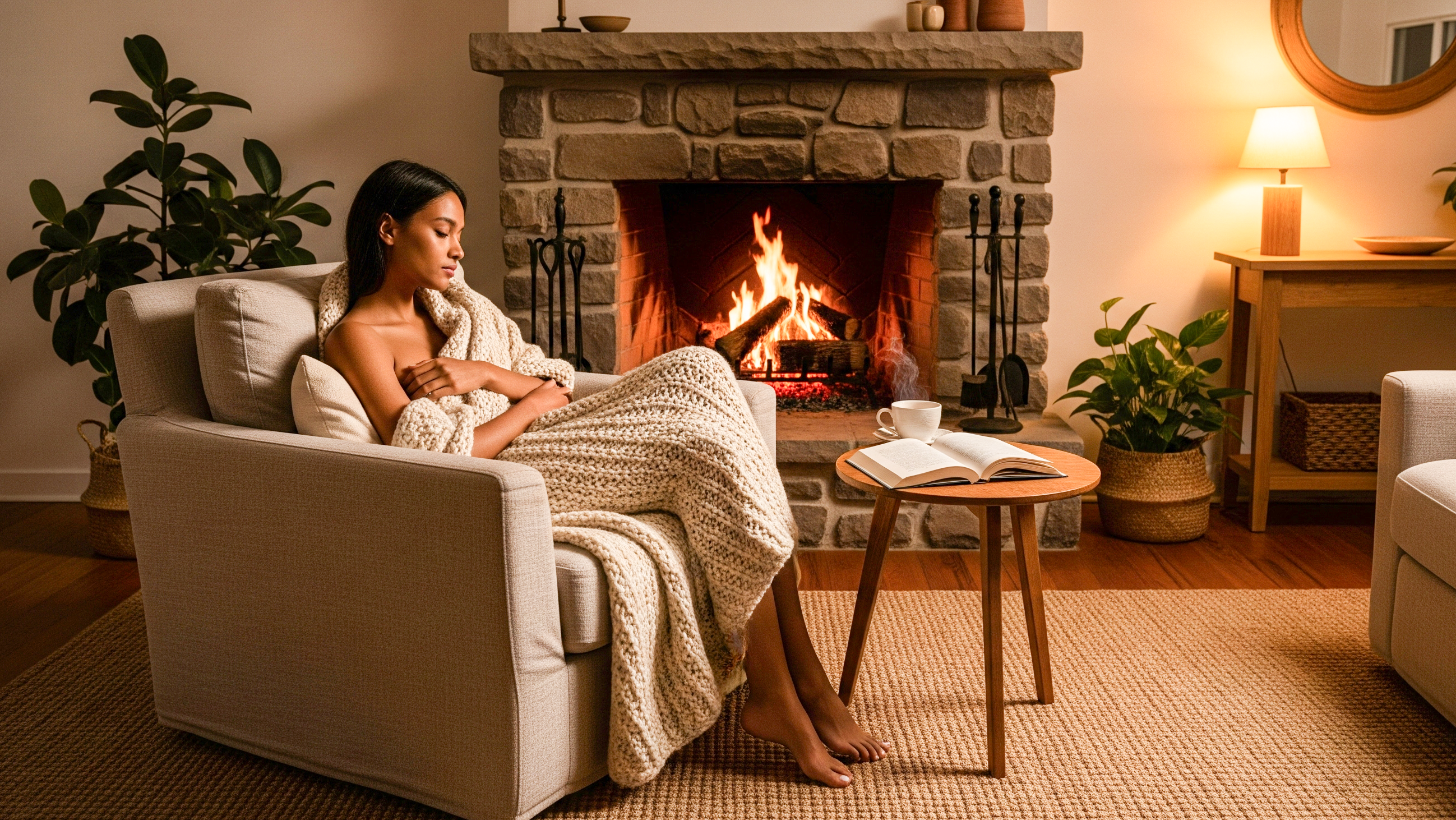
    ai-generated image of a young woman, wrapped in a blanket, sitting on an armchair next to a fireplace experiencing warm, cosiness and relaxation

    Hygge is fundamentally about being in the moment. This could be as simple as experiencing the warmth of a fire, the taste of a hot drink or the comfort of a blanket. This is a form of aletheia. The truth being uncovered is not a grand philosophical statement, but the simple, profound reality of a specific sensory experience. The cold weather outside serves as a stark contrast that highlights and uncovers the preciousness of the warmth and comfort inside.

    Uncovering our nature through human connection

    Hygge often involves shared experiences with friends and family. Intimate gatherings around a table or fireplace might lead to people having more open and honest conversations. In this context, aletheia is the uncovering of mutual understanding and the deepening of relationships. The shared experience of being together in a cosy, protected space can allow for a more authentic form of connection to emerge.

    Aletheia, biophilia and hygge

    I have a professional interest in biophilic design, so this intersection is very more compelling to explore. The choices you can make in creating a hygge-inspired space, such as the materials, the lighting, the arrangement of plants, are not just about aesthetics. They are a deliberate process of uncovering the potential for a space to be a sanctuary. The truth you are revealing is that a human-made environment can be a profound source of well-being and connection to nature, even when the natural world outside is dormant or unwelcoming.

    So, where are the intersections and what do they look like?

    I think very visually. I like diagrams and I often imagine and describe things as shapes and colours. So, I tried to create a Venn diagram of the relationship between aletheia, hygge and biophilia.

    Venn diagram (which can be downloaded as a pdf by clicking on the link below) showing the intersections of aletheia, biophilia and hygge

    I know that this is not especially easy to follow on a screen, so feel free to click on the link and download it. I will also explain it here.

    These are some of the aspects of each of the three concepts in very basic terms.

    Aletheia (uncovering truth, unforgetting, unconcealing)

    • Introspection and self-reflection. Confronting inner thoughts, understanding one’s character, intentions.
    • Authenticity. Stripping away artifice, being genuine with self and others.
    • Clarity and insight. Gaining deeper understanding, seeing what’s essential.
    • Presence. Being fully aware of the current moment and its realities.
    • Revelation of nature’s cycles. Understanding life, dormancy, resilience.
    • Truth of human connection. Deepening relationships through shared vulnerability.

    Biophilia (love of life and connections with nature)

    ai-generated image of a person enjoying sitting on a chair in a conservatory overlooking a dull autumnal day with cloudy skies and rain
    • Sensory coherence. Engaging all senses with natural stimuli (sight, sound, smell, touch).
    • Natural light and views. Maximizing natural light, connecting to external landscapes.
    • Natural materials and textures. Incorporating wood, stone, water features.
    • Plants and greenery. Indoor plants, conservatories, gardens.
    • Patterns and forms in nature. Fractals, organic shapes, natural rhythms.
    • Sense of place. Environments that evoke natural settings and processes.

    Hygge (cosy contentment and wellbeing)

    ai-generated image of a woman,  wrapped in a blanket, sitting on a rug on the floor near an open fire in the living room. There are natural materials and wooden furnishings as well as a pile of logs.
    • Warmth and comfort. Soft blankets, cushions, fires, gentle heating.
    • Atmosphere and ambiance. Soft, layered lighting (candles, lamps), quiet sounds.
    • Presence and mindfulness. Appreciating simple pleasures, being in the moment.
    • Social connections. Shared experiences with loved ones, community.
    • Safety and security. Creating a sanctuary, a protected space.
    • Simplicity and decluttering. Focusing on what is useful for comfort, without it being distracting.

    What happens in the middle?

    When you get to the middle of the Venn diagram and look at Aletheia X Biophilia X Hygge, what do we find?

    Holistic wellbeing

    The combination creates an environment that supports physical comfort, mental clarity, emotional authenticity, and a deep connection to the natural world.

    Mindful nature immersion

    By creating cosy, nature-rich meditative spaces, you can encourage deep, present-moment reflection and the uncovering of personal and universal truths.

    Winter sanctuary for revelation

    To get a more complete connection with nature, try and adapt spaces such as a conservatory to offer warmth, natural beauty, and a safe, freeing environment for introspection and genuine connection during the dormant winter months.

    Naturism as an extension of hygge

    While hygge often focuses on being cosy and wrapped up, nudity presents a compelling alternative perspective. It is a way to achieve a feeling of comfort and contentment by embracing vulnerability and freedom.

    Comfort in one’s own skin

    Hygge is about creating a space where you feel completely comfortable. For a naturist, this includes being comfortable in one’s own skin. A warm, comfortably-lit living room with natural textures provides the perfect environment for this. To experience a sense of comfort that is not dependent on external layers of clothing, a form of naked hygge.

    Simplicity and presence

    Both hygge and naturism champion simplicity. Hygge focuses on the simple pleasures of life, and naturism removes the complication and consumerism associated with fashion. This shared emphasis on simplicity makes it easier to be present in the moment and appreciate the authentic truth of an experience.

    Naturism as an aletheic experience

    When you are in your sanctuary you are not on show. The people you are with (if not enjoying solitude) are those that you are close to and who you choose to be with. Being naked in a biophilic, hygge space allows for the ultimate un-forgetting of societal artifice, fostering body acceptance and a direct, authentic sensory connection to a nature-inspired sanctuary.

    Nudity is a powerful, practical extension of both aletheia and hygge. It is a way to achieve the desired state of comfort and wellbeing, not just a lifestyle choice.

    The key connection is that naturism is fundamentally about truth and authenticity. Uncovering the body strips away the layers of clothing that can serve as both physical and social barriers.

    Uncovering truth

    In the context of aletheia, naturism is a profound act of truth telling. It challenges the societal norm that our bodies should be hidden, uncovering a more authentic self-image.

    Truth of self

    Unclothed, you confront the truth of your own body, without the adornments and artifice of fashion. This can lead to a deeper sense of self-acceptance and body positivity.

    Truth of connection

    In a social setting, naturism removes a major psychological barrier. Without the social cues and judgments that clothing can impose, people can interact on a more fundamental, human level. This can “uncover” a truer, more egalitarian form of human connection.

    Truth of nature

    I am not at all religious, nor even spiritual. However, as both a humanist and a biologist, I appreciate the organic and natural world and I am always very conscious that we are an integral part of nature, not just a bystander.

    Naturism is a direct way to dissolve the boundary between the person and the natural environment. Being outside in a garden or a natural space without clothing – even for the briefest of time in winter – can create a profound sense of integration and belonging, a physical expression of biophilia. A few minutes of enveloping your body in fresh, crisp air reveals the simple truth that you are a part of nature, not separate from it.

    AI-generated image showing the head and torso of a nude man standing outside on a crisp, winter morning

    When you combine aletheia, hygge, biophilia and naturism in your home, you are not just creating a cosy space. You are building a sanctuary that actively promotes self-acceptance, authentic connection and a deeper, more truthful relationship with both your body and the natural world.

    Moving from the philosophical to the practical – how to create an aletheic hygge space in the home

    The living room is the perfect place to start, as it is often the heart of the home and a space for both solitary contemplation and shared connection. Combining aletheia and hygge in a living room means creating an environment that is not just cosy, but also revealing of natural truth and human well-being.

    Here are some practical ideas for your living room, broken down into key design principles:

    The aletheia of light

    Winter can be a time of darkness, but light is a key element of both hygge and aletheia. The truth of the outside world is found in the limited natural light, and aletheia indoors is about a conscious revelation of light in your space.

    Let’s start by making the most of what natural light is available. It might be limited, so try and squeeze as much benefit out of it as possible.

    Position furniture to take advantage of any natural light coming through windows and use mirrors opposite windows to reflect and amplify the light you do have. This is a subtle yet powerful biophilic principle. Even on a grey day, you are consciously acknowledging and maximizing the natural world outside.

    Make use of technology. Smart lighting can be a real boon at this time of year. Intensity and colour temperature can be adjusted, and even automated, to complement the changing conditions outside and if you get it right, the connection between indoors and out can become almost seamless. This not only looks better (as the tone of the light from natural and artificial sources can be matched), but it might reduce eye strain too.

    Placing lamps behind objects, such as furniture, so that it washes the wall or ceiling with light rather than being directed into the room can also be calming and is also more naturalistic.

    A light placed at the back of a shelf washing the wall and ceiling with soft, warm light to proved gentle illumination and minimizing glare

    Next, especially in the evenings, consider layered lighting. Instead of using, harsh overhead lighting, use multiple sources, such as table lamps, with warmer toned bulbs. Think about adding a floor lamp near your favourite armchair, a table lamp on a side table, and even a cluster of candles (including the very realistic LED flame versions) on the mantlepiece or a coffee table. The soft, shifting glow of candles is an excellent way to create a warm, calm atmosphere.

    ai-generated image of a group of three candles on a mantelpiece above a fireplace

    The biophilic truth of texture and materials

    Our connection to the natural world is fundamental, and biophilic design is all about recreating some of those links in the artificial environments of buildings. This can be expressed through the materials that are used.

    Tactile textiles are a good place to start. Layering is key for both visual warmth and physical comfort and for breaking up the harsh shapes created by straight lines and sharp corners.

    A chunky knitted woollen throw draped over the sofa, a pile of textured cushions, and a deep pile wool rug would both look and feel warm. Natural colours will add a biophilic touch as well. These textures encourage you to physically engage with the space and feel the comfort. The feelings are definitely amplified and more sensual when naked.

    Natural materials that tell a story of their origins are a good way of reconnecting with nature during the cold, damp months of the year. Wooden furniture, a wicker basket for blankets, or a stone or ceramic vase all bring a sense of the outdoors in. The ‘truth’ revealed here is that these elements are not just decorative – they are part of a larger, living system. You might even consider collecting some winter elements from outside, such as logs for the fireplace or a simple arrangement of pinecones and evergreen branches.

    Horticultural aletheia: bringing life indoors

    In winter, when the garden is dormant, the truth of nature’s persistence can be revealed indoors. Houseplants grouped together can create a mini-ecosystem. Wall mounted planters or moss panels can bring vegetation to eye level. Choose plants that are tolerant of low light levels, and consider a variety of textures and sizes to create a naturalistic look.

    Photograph of a group of houseplants

    As well as house plants, consider some seasonal botanical displays. Cut winter branches, dried grasses, pine cones, seed pods or even a small basket of nuts are all worth considering. The beauty of these elements is in their stripped-back, honest form. They remind us that even in stillness, there is a quiet, powerful life force.

    ai-generated image of a wooden bowl full of a variety of nuts on a sideboard

    The human truth: hearth and sanctuary

    Finally, the living room should be a sanctuary for the human experience. Hygge is about creating a space for this, and aletheia is about the profound truths that can emerge within it. So, it makes sense to be comfortable.

    Create a cosy nook with a comfortable armchair and a small table for a book and space for a hot drink or a glass of wine. It’s a place designed for introspection and quiet contemplation, where you can be alone with your thoughts.

    If you have a fireplace, it’s the natural heart of the room – a literal hearth. If not, you can create a similar focal point with a well-curated bookshelf, a gallery wall of art, or a collection of cherished objects. These elements tell the truth of your identity and your journey, making the space uniquely your own and a place for genuine self-reflection.

    Photograph of a woodburning stove in a hearth

    By combining these elements, your living room becomes more than just a place to escape the cold. It becomes a space where the sensory comforts of hygge facilitate the deeper process of aletheia, uncovering the truths of nature, beauty, and your own inner world.

    Need some advice?

    Get in touch for advice on creating a snug, biophilic and aletheic nook in your home to get through winter.

    ← Back

    Thank you for your response. ✨

  • A space for meditation

    A space for meditation

    Reflections on the ups and downs I experienced post-pandemic, and how meditation has helped my mental health. Through personal insights, I discuss finding peaceful spots for meditation, both outdoors and indoors, and suggest creating calming environments with natural elements. The potential benefits of nude meditation and the role of wellness spaces are also highlighted.

    Note: This post explores the psychological and wellbeing benefits of naturism within biophilic environments. It contains illustrations depicting nudity and the human form.

    A period of change

    The last few years have had their ups and downs for me, and for many others as we emerged into our post-pandemic world of seemingly ever more uncertainty. New ways of working and the stresses of a high cost of living have taken their toll on mental health.

    Now, I am not a therapist, and I don’t pretend to be able to offer advice, but I can say that taking fifteen to thirty minutes out of my day for meditation has done me the power of good.

    I started with guided meditations (and there are some good sources available online), but now I tend to guide myself. The key is to really notice how you feel, and that includes how your body feels in relation to the space you are in.

    It is possible to meditate almost anywhere, although quiet places are best. When distractions are minimized, and the place where you are meditating is calm, I think the process becomes more effective.

    A photograph of a natural environment - woodland in spring in Southeast England including bluebells and trees

    Connecting with nature

    Connecting with nature makes a positive difference, as that reduces stress before you even start. Just being in a natural environment has been shown to reduce stress and improve wellbeing – even if only for as little as ten minutes a day. Find a quiet spot, notice how you feel and take time.

    Having a literal connection with the Earth and the air can make the experience more profound. If you have access to a place where you can undress and experience nature in your most natural state, then you may uncover more than just your skin. For me, and I can speak only for myself, a state of nudity in nature when meditating reveals not only a connection with nature, but a realisation of our own place in nature.

    An ai-generated image of a naked woman practicing meditation outdoors in a natural environment where a deep connection with nature can be achieved

    Of course, finding such a place to go may be difficult. Not everyone is comfortable with the idea of being naked in a potentially public place (and in some countries, that may also be illegal, although thankfully not in the UK). So, what are the alternatives?

    If you are lucky, you may have a quiet, secluded garden. Being able to step through your back door into your own private space is a luxury, but one that need not be expensive. Some simple screening with plants and the placement of items such as water features or a sculpture can help create a naturalistic feel and still allow a deep connection with nature. A patio or terrace can be put to good use too.

    AI-generated image showing a person meditating nude on a balcony, surrounded by potted plants and featuring a wooden sculpture and water feature

    Indoor spaces

    Meditation should be comfortable and sometimes that means having to avoid bad weather. This is where the principles of biophilic design can be used to create indoor spaces that evoke a sense of being in nature, even when actually being in nature is not practical.

    This means using a combination of elements including using natural materials, plants, natural colour schemes and textures. The most important thing is to be free from distractions and to feel comfortable.

    Meditation is all about noticing how you feel. When it works well, you get into a state of calm, relaxation and mental clarity. Having that interrupted by noise or sudden changes in light or temperature can spoil things.

    In the home, a living room or bedroom can be ideal. So, how could you set about creating an aletheic space for meditation?

    Here are some general principles.

    Mindful decluttering

    Regardless of the room’s primary function, the most crucial step is to keep the space free from unnecessary distractions and clutter, so if possible, keep non-essential items stored away and out of sight when not in use.

    Natural materials and colours

    A palette of subtle, natural colours like warm whites, greens and earthy tones can be relaxing. Use materials such as reclaimed wood for furniture, linen for soft furnishings, and wool or jute for rugs. This creates a calming, organic feel that connects you with nature.

    Layered lighting

    Instead of a single harsh overhead light, use multiple sources. Consider a floor lamp with a linen shade for soft, diffused light, and maybe a small, warm-toned lamp on a side table. This allows you to create a gentle ambiance for meditation that differs from the room’s everyday use.

    A designated zone

    Use a large rug to define the meditation zone. Use furniture, such a s a coffee table, which can be easily moved to the side when you want to meditate.

    Plants

    Incorporate a few large, statement houseplants in nice pots. Their large leaves will not only add a touch of nature but can also serve to create a sense of seclusion and privacy when you sit near them. Moss panels on the walls can also add some biophilic elements – they are tactile, green and also have good acoustic properties.

    Circular wall-mounted decorative panel of preserved mosses and lichens

    The bedroom as a meditative space

    A bedroom is naturally a more private space, making it an intuitive choice for a meditation sanctuary. If floor space is limited, the bed itself can be used. the most important thing is to be able to focus on your feelings without distraction. Natural linen bedding in neutral colours would be ideal.

    Adapting the Space for nude meditation

    Your space should support your meditation practice without feeling forced or exposed, so try to position your meditation spot in a way that provides privacy. Remember, though, that the aletheic concept is also about uncovering something about your own nature in your environment. That slight sense of exposure or vulnerability can be quite revealing, so while protecting your own privacy, don’t lock yourself in.

    AI-generated image showing a naked person meditating in a room inside a house, showing plants, furnishings made of natural materials and a neutral colour scheme

    The careful placement of plants can provide a sense of seclusion and privacy while allowing light to permeate the space through the foliage.

    Using foliage near windows and light sources can also create wonderful shadows, which can be used to create areas of partial concealment and intimacy, allowing you to feel both exposed to the environment and protected within it.

    Spas and wellness spaces

    Many health clubs, spas and other wellness spaces provide space for meditation. These days, even some workplaces provide wellness rooms (although they are often not used as in some organizations, their use can be viewed as a sign of weakness, which many people do not want to risk).

    I think that there is an opportunity for health spas, hotels and other wellness spaces – beyond existing naturist clubs – to offer space for nude meditation. Not everyone that would use such spaces would consider themselves naturists or be members of a naturist club or society, but may very well wish to take advantage of a space where they could disrobe and make a complete, unconcealed connection with nature.

    This is also an opportunity for naturist venues to widen their offer and open some of their spaces up for focused activities such as solo nude mediation. This could make it easier for some people to consider aspects of naked wellness without having to jump into the full gamut of more traditional naturist activities.

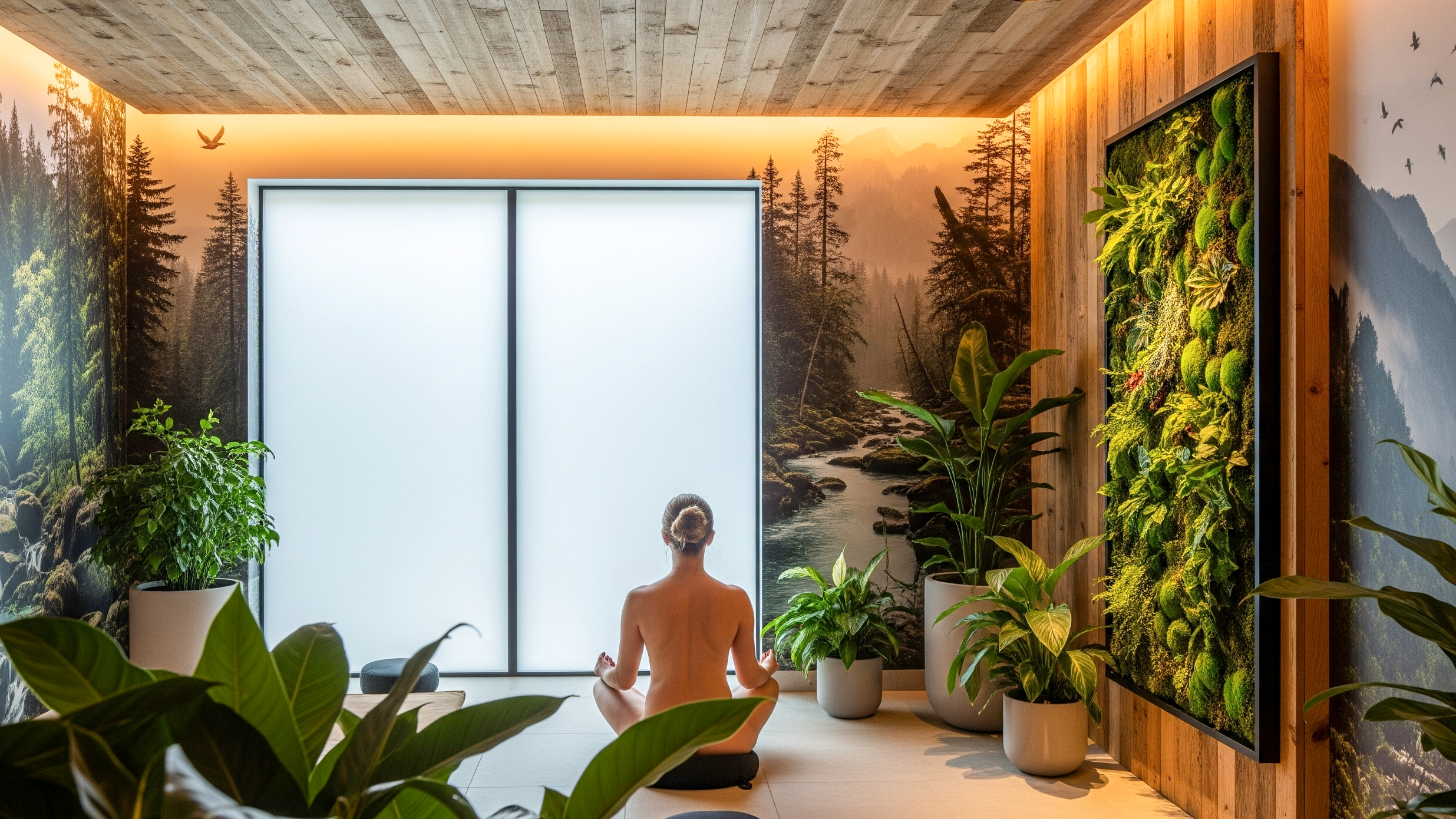
    AI-generated image showing a person meditating in a designated aletheic space in a wellness spa / health club

    Interested in an aletheic space for your home or naturist club?

    Get in touch to book a consultation and let’s design a calming, authentic environment together.

    ← Back

    Thank you for your response. ✨